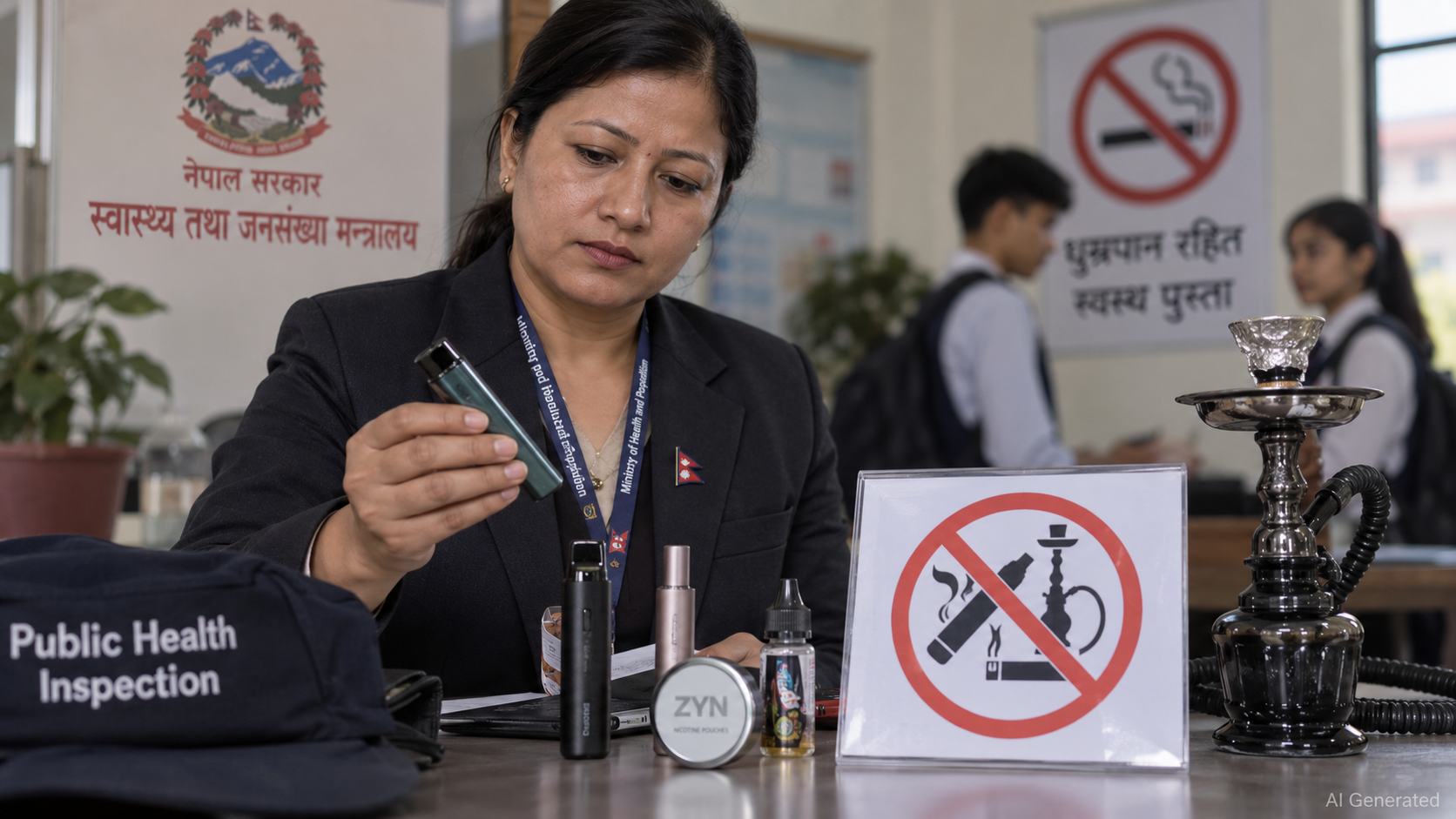
The Ministry of Health and Food Hygiene has published the draft Tobacco Products (Control and Regulation) (First Amendment) Bill, 2083 for public consultation following a ministerial-level decision on Shrawan 19, 2083. Comments may be submitted to law.section@mohp.gov.np within seven days, by Shrawan 25, 2083. The bill significantly broadens the definition of tobacco products to include heated tobacco, e-cigarettes/vapes, electronic nicotine-delivery products, nicotine pouches, nicotine salts, e-juice/e-liquid, hookah and shisha, in addition to conventional cigarettes, bidis, cigars, tobacco, khaini and gutkha.
One of the most significant proposals is a complete prohibition on the production, import, sale, distribution and storage of e-cigarettes/vapes, heated tobacco products, nicotine pouches, nicotine salts, e-juice, hookah and shisha. The bill would also establish a “tobacco-free generation” covering people born on or after Baisakh 1, 2072, who would not be permitted to purchase, consume or use tobacco products. Federal, provincial and local governments would also be empowered to officially declare specific geographical areas, locations, villages or wards as smoke- and tobacco-free zones.
The draft introduces much stricter packaging and promotion controls. Manufacturers and importers would be barred from using trademarks, logos, promotional symbols, brand colours and lettering on packaging, as well as terms such as “light,” “low tar,” “safe,” “luxury,” “chocolate,” “strawberry,” “ice” and “menthol” that could make products more attractive or misleading. Cigarette and bidi packs could not contain fewer than 20 sticks, and long-lasting plastic packaging would be prohibited. Health-warning images and messages would have to cover specified large portions of tobacco packaging—including 100% of several principal surfaces and 90% of others, depending on package type—and the ministry could require different warnings each year.
Penalties would also rise sharply. Illegal production, import, sale, distribution or storage of the newly prohibited nicotine and tobacco products could result in confiscation and fines of Rs 500,000 to Rs 700,000. Violations involving the proposed tobacco-free generation could bring a fine of up to Rs 10,000 for a first offence and double that amount for subsequent offences. Other existing fines would also be increased, while inspectors would receive wider powers to examine records, monitor producers and sellers, investigate violations and recommend or initiate legal action. The bill additionally proposes directing 20% of corporate-social-responsibility funds set aside by tobacco-related businesses toward purposes specified under the law.