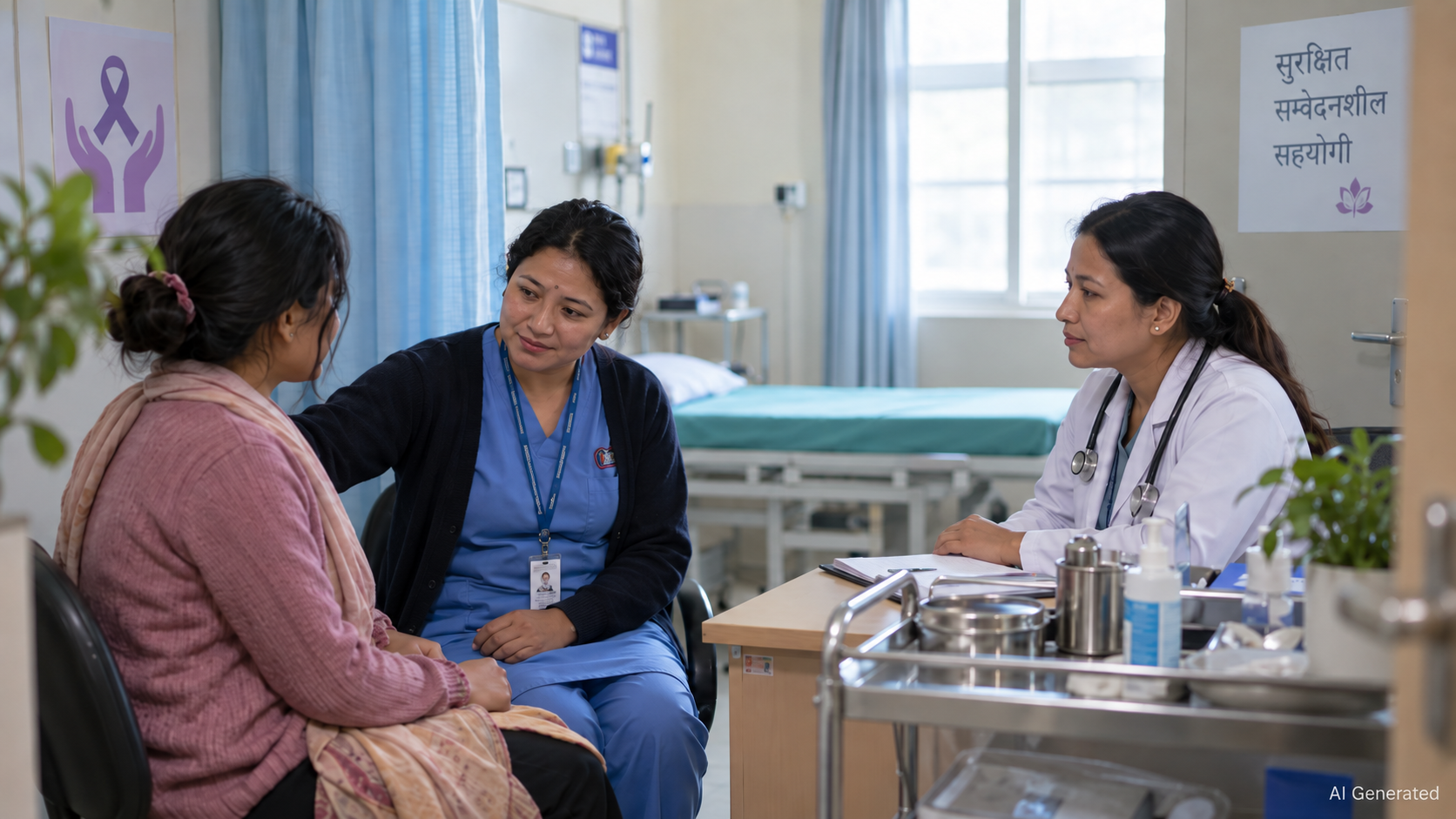
The Ministry of Health and Food Safety has issued the Gender-Based Violence Management One-Stop Crisis Management Centre Operating Directive, 2083, approved through a ministerial-level decision on Asar 29, 2083. The directive establishes a nationwide framework for providing coordinated services to people affected by gender-based violence, including women, men, children, sexual and gender minorities, persons with disabilities, senior citizens and people affected by violence during conflict or disasters. A central principle is that survivors should receive coordinated assistance through one system without repeatedly having to recount traumatic incidents, while their privacy, safety and confidentiality must be protected.
OCMCs are required to coordinate a broad package of services including medical examination and treatment, injury care, pregnancy and STI testing, HIV-related services and PEP, hepatitis-B vaccination, safe abortion where applicable, forensic and medico-legal examination, evidence and specimen collection, mental-health and psychosocial counselling, police protection, free legal assistance, safe shelter and rehabilitation. Survivors requiring services unavailable at the hospital must be referred to appropriate institutions, while police, government attorneys, local governments, shelters, rehabilitation centres, NGOs and other agencies are expected to work through coordinated referral arrangements. A designated contact person must remain available 24 hours a day, seven days a week.
The directive also sets minimum infrastructure and staffing requirements. An OCMC should generally have at least three rooms, including space for counselling, examination and administration, along with an attached toilet where specified, at least two beds for survivors, appropriate forensic and medical equipment, medicines, laboratory supplies, reporting tools and child-, disability- and survivor-friendly access. Each centre is to have a trained centre chief, contact person and case-management personnel according to patient volume, and multidisciplinary committees are established at federal, provincial, district and institutional levels for coordination, oversight and case management.
The annexes identify 97 hospitals across all seven provinces where OCMC services are operating and provide detailed standards for equipment, forensic facilities, referral procedures, survivor records, reporting forms and performance assessment. Centres must maintain confidential records, enter required information into the designated reporting system, regularly review service quality and use survivor-satisfaction feedback to improve performance. The directive replaces the earlier hospital-based OCMC operating directive from 2077, creating a more comprehensive national framework for gender-based violence response and survivor-centred care.