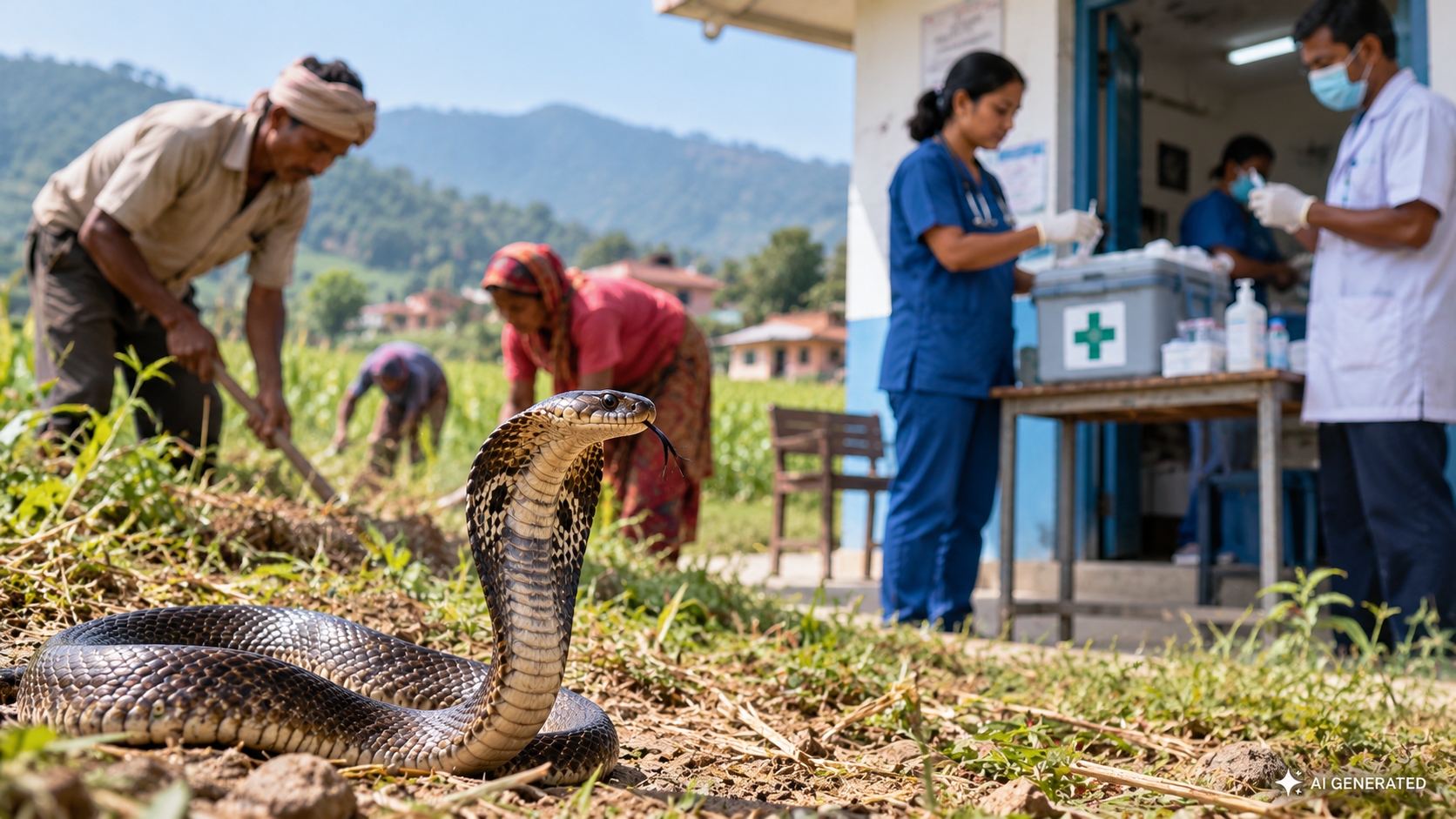
The National Disaster Risk Reduction and Management Authority has prepared the Snakebite Prevention and Control Preparedness and Response National Action Plan, 2083, which has been circulated to local governments for implementation. The plan treats snakebite as both a serious public-health problem and a disaster-risk issue, noting that farmers, labourers, women, children and rural communities are particularly vulnerable, especially during warmer and monsoon months.
The document identifies several high-risk areas across Madhesh, Koshi, Bagmati, Gandaki, Lumbini and Sudurpashchim provinces, including districts such as Jhapa, Morang, Sunsari, Chitwan, Dang, Kapilvastu, Rupandehi, Banke, Bardiya, Kailali and Kanchanpur. Its priorities include mapping high-risk locations, expanding awareness and behaviour-change campaigns in local languages, strengthening treatment centres, building the capacity of health workers, ensuring antivenom and essential treatment supplies, improving emergency rescue and referral systems, and establishing stronger monitoring and surveillance.
The plan also calls for health facilities in risk-prone areas to maintain necessary emergency equipment and supplies, including antivenom, oxygen and airway support, IV equipment and referral arrangements, while ensuring trained personnel are available to recognize and manage severe envenomation. Community-level measures focus on safer surroundings, reducing snake habitats around homes, improving sanitation and lighting, and rapidly transporting bite victims to appropriate health facilities instead of relying on harmful or delayed traditional practices.
The government aims to reduce snakebite deaths, disability and the resulting economic and social burden through coordinated action by federal, provincial and local authorities. The plan further emphasizes public education on safe first aid, stronger emergency transport and evidence-based treatment so that snakebite victims can reach lifesaving care as quickly as possible.