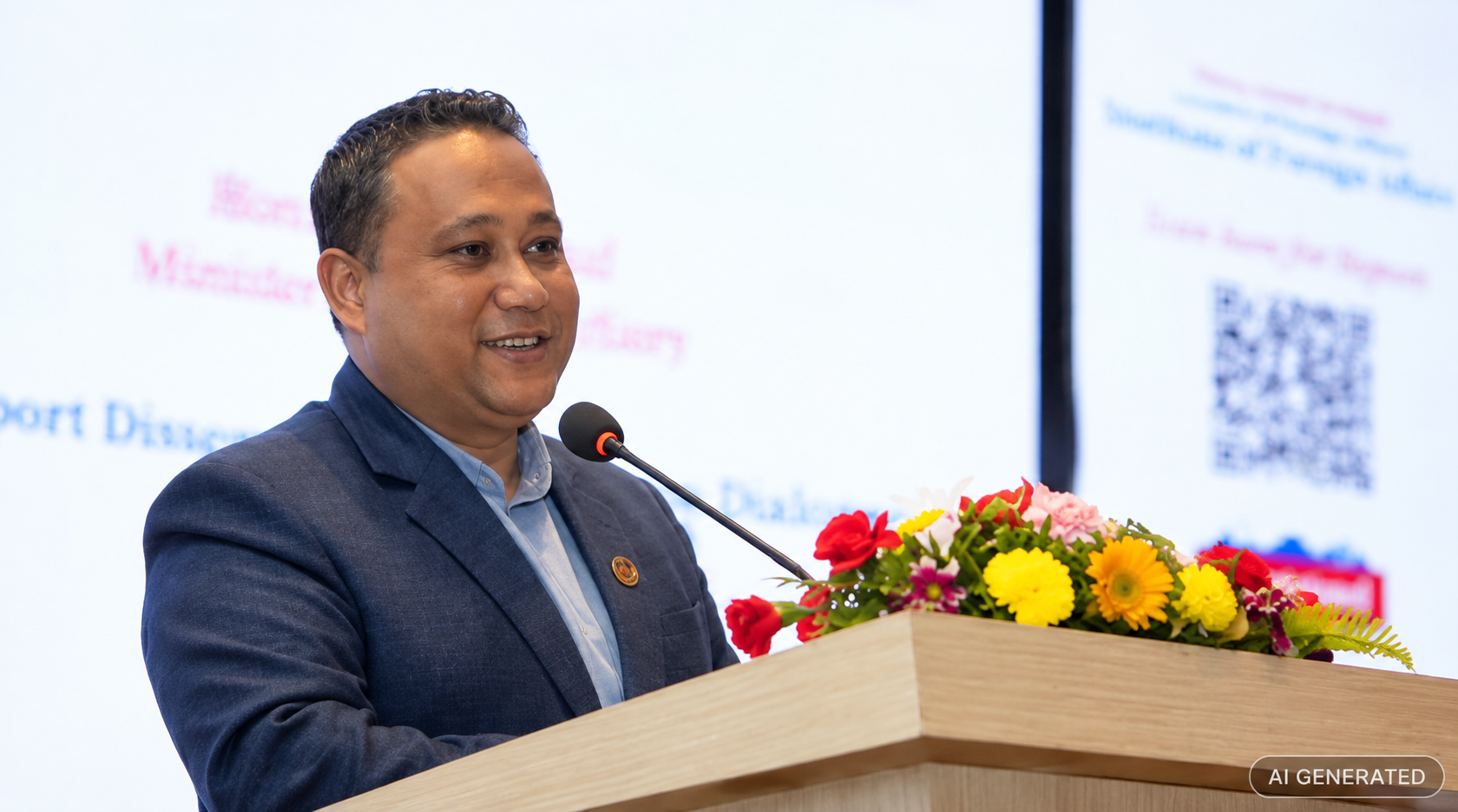
Nepal’s Minister for Foreign Affairs, Shisir Khanal, has emphasized the government’s commitment to rebranding Nepal’s international identity to attract foreign investment, promote domestic products and strengthen its global economic and diplomatic presence. Addressing the “Brand Nepal: National Assets, Global Narratives and Strategic Opportunities” Project Report Dissemination and Policy Dialogue in Kathmandu on November 5, 2026, Khanal described Nepal’s national reputation as a strategic asset influencing investment decisions, diplomatic relationships, consumer confidence and international standing. The programme was organized through an initiative involving the Institute of Foreign Affairs (IFA) and Friedrich-Ebert-Stiftung (FES) Nepal. Highlighting the country’s Himalayan landscapes, Lumbini, cultural heritage and diverse traditions, the minister stressed that Nepal’s global image must extend beyond conventional tourism attractions to showcase its entrepreneurial capabilities, creative industries, technological talent and contributions to international development.
A major priority outlined by the minister was the protection, promotion and commercialization of Nepal’s distinctive cultural and economic assets. Khanal highlighted the international potential of handwoven textiles, indigenous agricultural practices, traditional medicinal knowledge, regional cuisines and artistic craftsmanship. He emphasized the importance of strengthening intellectual property protection, geographical indications, certification systems and quality standards to improve the global competitiveness of Nepali products. The minister also stressed that local producers, artisans and communities must retain ownership and receive fair economic benefits from their traditional knowledge and creative contributions. Expressing his vision for stronger international recognition, Khanal said Nepal should work toward a future in which “Made in Nepal” becomes associated with authenticity, quality and responsible production. He further identified public diplomacy as a central instrument for promoting Nepal’s achievements, including its contributions to United Nations peacekeeping, community forestry, cultural coexistence and emerging digital industries.
The foreign minister also highlighted the government’s intention to connect Nepal’s national branding with emerging opportunities in hydropower, sustainable tourism, digital services, entrepreneurship and climate diplomacy. He stated that Nepal’s hydropower resources offer significant potential for regional energy cooperation, while its natural and cultural heritage can support diversified, higher-value tourism. Similarly, the country’s young professionals and entrepreneurs are increasingly participating in international markets through technology, innovation and creative industries. Khanal emphasized that Nepal’s experience with mountain ecosystems and climate vulnerability strengthens its relevance in global environmental discussions. Referring to the Sagarmatha Sambaad, first convened in 2025 and scheduled again for 2027, he described the initiative as an important platform for expanding Nepal’s international engagement on climate change and sustainable development. The minister said the Ministry of Foreign Affairs’ Economic Diplomacy Division and diplomatic missions would continue connecting Nepal’s strengths with international investment, markets, technology and knowledge networks.
Concluding his remarks, Minister Khanal called for stronger cooperation among government ministries, diplomatic missions, businesses, academic institutions, cultural organizations, local communities and the Nepali diaspora to build a credible and internationally competitive national brand. He highlighted the role of the ministry’s Public Diplomacy Division in promoting cultural exchanges, academic partnerships, diaspora engagement and strategic international communication. The minister welcomed the Brand Nepal report’s emphasis on institutional responsibilities and practical recommendations, stating that the ministry would examine its findings to strengthen public diplomacy, economic engagement and Nepal’s strategic positioning. He also encouraged the Institute of Foreign Affairs to continue research and policy dialogue on national branding. The address outlines government priorities and strategic opportunities rather than announcing a newly approved national branding policy, dedicated funding package or specific implementation deadlines. The initiative reflects Nepal’s broader ambition to transform its international reputation from one primarily associated with natural beauty and cultural heritage into a more comprehensive identity built around innovation, economic competitiveness, trusted partnerships and sustainable development.