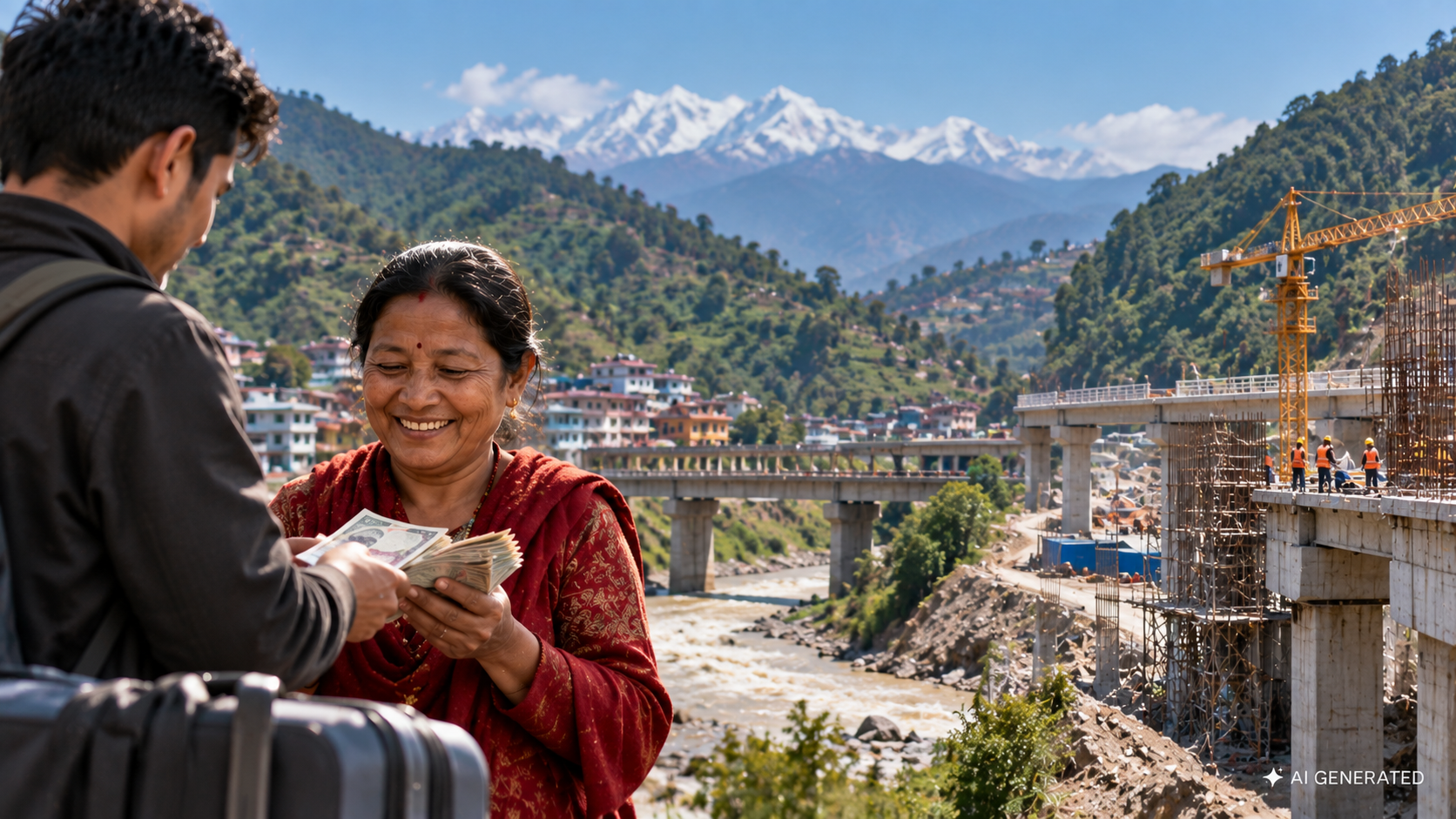
Nepal’s economy is estimated to have grown by 3.85 percent in FY 2082/83, down from 4.43 percent a year earlier, with the economy reaching around Rs 6.6 trillion. The annual report shows agriculture growing by 1.58 percent, industry by 5.67 percent and services by 4.21 percent. Revenue collection reached Rs 1.249 trillion, equivalent to 84.42 percent of the annual target, while total government spending stood at Rs 1.582 trillion, or 80.52 percent of the allocated budget. Capital expenditure was the glaring weak spot, with only 46.79 percent of the allocation spent.
The external sector, meanwhile, delivered the kind of numbers finance officials tend to frame in bold. Remittance inflows jumped 37.1 percent to Rs 2.363 trillion, the current account surplus widened to Rs 923.56 billion, and the balance of payments surplus rose to Rs 1.027 trillion. Foreign exchange reserves climbed 45.6 percent to Rs 3.898 trillion, enough to cover 23 months of merchandise imports and 19.6 months of goods and services imports. Foreign direct investment also rose sharply by 137 percent to Rs 28.49 billion.
Fiscal pressure, however, intensified. Public debt increased to Rs 2.975 trillion, equal to 45.07 percent of GDP, with external debt accounting for 53.77 percent and domestic debt 46.23 percent. Debt servicing reached Rs 386.23 billion, equivalent to 5.85 percent of GDP. The report also shows total foreign assistance commitments of Rs 161.46 billion, with roads and physical infrastructure receiving the largest sectoral share, followed by public financial management, water and sanitation, climate and environment, energy and digital transformation.
The report also highlights broad administrative and structural reforms, including PAN linkage with the national identity system, mandatory e-billing for large transactions, customs digitization, NEPSE restructuring efforts, financial-sector reform, climate finance measures and new development-finance arrangements. Yet implementation remained uneven: of 55 retained annual milestones, only 24 were completed, while 21 remained ongoing and 10 had not started. That rather neatly sums up government reform documents everywhere: plenty of architecture, fewer finished rooms.