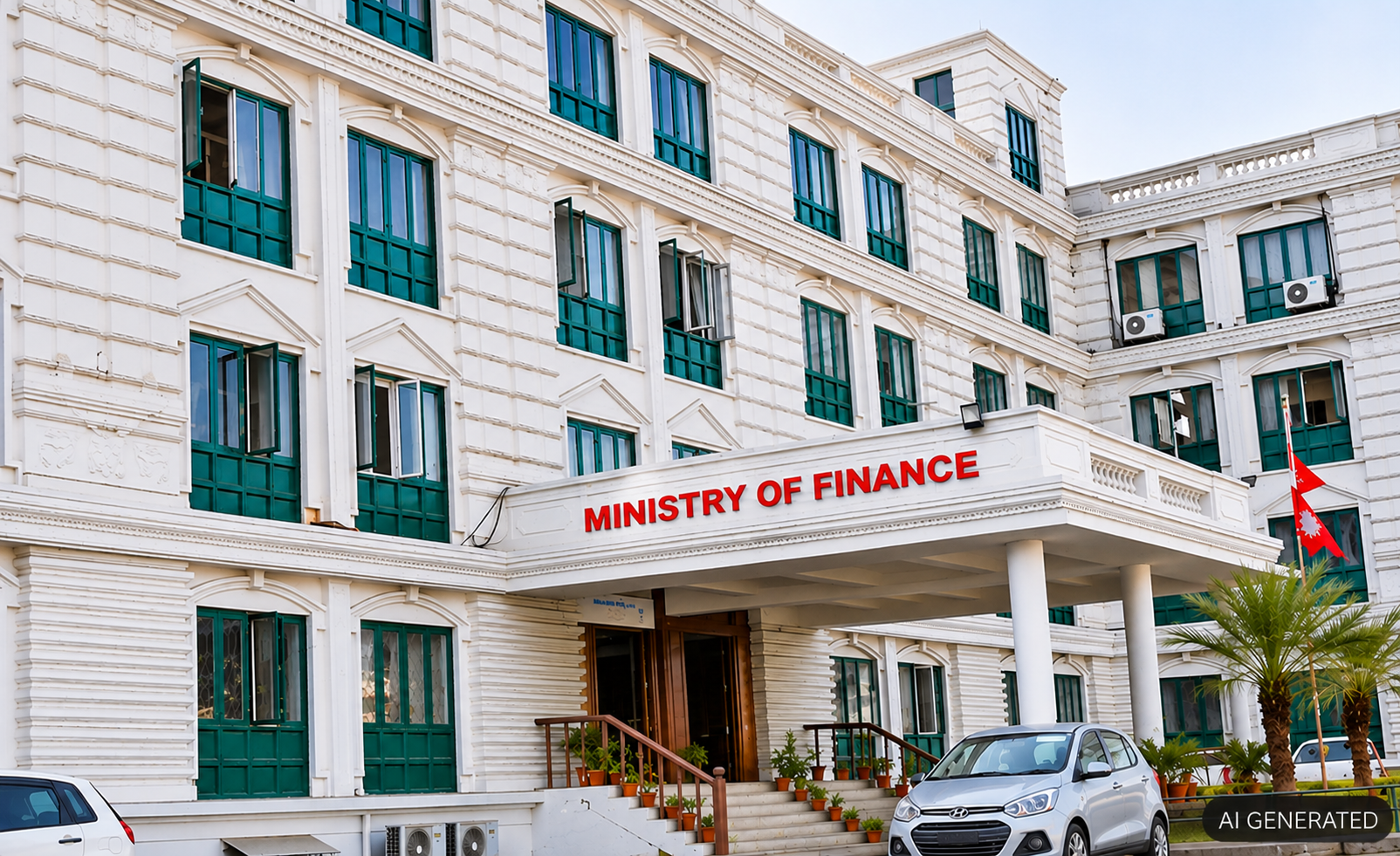
The Ministry of Finance has released its first-quarter financial and administrative progress report for fiscal year 2083/84, covering mid-July to mid-October 2026. According to the report, the government spent approximately Rs 400.19 billion, or 18.84% of its Rs 2.124 trillion annual budget, by the end of Ashwin 2083. Recurrent expenditure reached Rs 294.26 billion, representing 23.16% of its allocation, while capital expenditure remained significantly lower at Rs 29.74 billion, or just 6.90%. Spending under financial arrangements stood at Rs 76.19 billion, equivalent to 18.03% of the allocated amount. Although overall budget utilization improved slightly from 18.54% during the corresponding period of the previous fiscal year, the figures highlight continued challenges in accelerating development expenditure.
The ministry reported total revenue and other receipts of approximately Rs 301.16 billion, against a first-quarter target of Rs 330.22 billion, achieving about 91.20% of the target. Collections increased by 19.90% compared with the corresponding period last year. Value-added tax revenue rose by 31.03%, customs revenue by 16.86%, excise duty by 11.26%, and income tax revenue by 9.71%. Meanwhile, the government received approximately Rs 42.33 billion in foreign development assistance, including Rs 34.34 billion in loans and Rs 7.98 billion in grants. Public debt reached approximately Rs 3.009 trillion by the end of Ashwin, equivalent to 45.59% of GDP, with external borrowing accounting for 53.13% and domestic borrowing for 46.87% of outstanding debt.
The report also presents a mixed picture of Nepal’s broader economic performance. By the end of Bhadra 2083, foreign exchange reserves had increased to approximately Rs 4.066 trillion, sufficient to cover 17.8 months of goods and services imports. Remittance inflows rose by 23.94% compared with the same period a year earlier, while the balance of payments and current account remained in surplus at Rs 187.68 billion and Rs 169.04 billion, respectively. However, year-on-year consumer inflation climbed to 6.34%, exceeding the government’s 5.5% target. The average base interest rate of commercial banks declined to 4.70%, reflecting easing lending-rate conditions despite rising consumer prices.
Beyond fiscal performance, the ministry reported progress in financial-sector reforms, international development cooperation, digital governance, and anti-money-laundering initiatives. It recorded 512 public grievances received through the Hello Sarkar system, all of which were forwarded for resolution, and provided information in response to eight formal Right to Information requests. The ministry also reported advancing legislative reforms concerning public debt, banking, securities regulation, and financial institutions, alongside cybersecurity improvements and preparations related to Nepal’s sovereign credit rating. Overall, the quarterly report highlights improving revenue growth and external-sector stability while underscoring persistent concerns over weak capital expenditure, increasing public debt, inflationary pressures, and the need for more effective budget implementation.