The Office of the Prime Minister and Council of Ministers (OPMCM) has defined its updated organisational responsibilities under the Government of Nepal (Allocation of Business) Rules, 2083, dividing its work into three broad areas: Governance Affairs, Development Management, and Law and Human Rights. The document assigns the PMO responsibilities ranging from Cabinet coordination and implementation of government decisions to national security, governance reform, development monitoring, human rights, information technology and artificial intelligence.
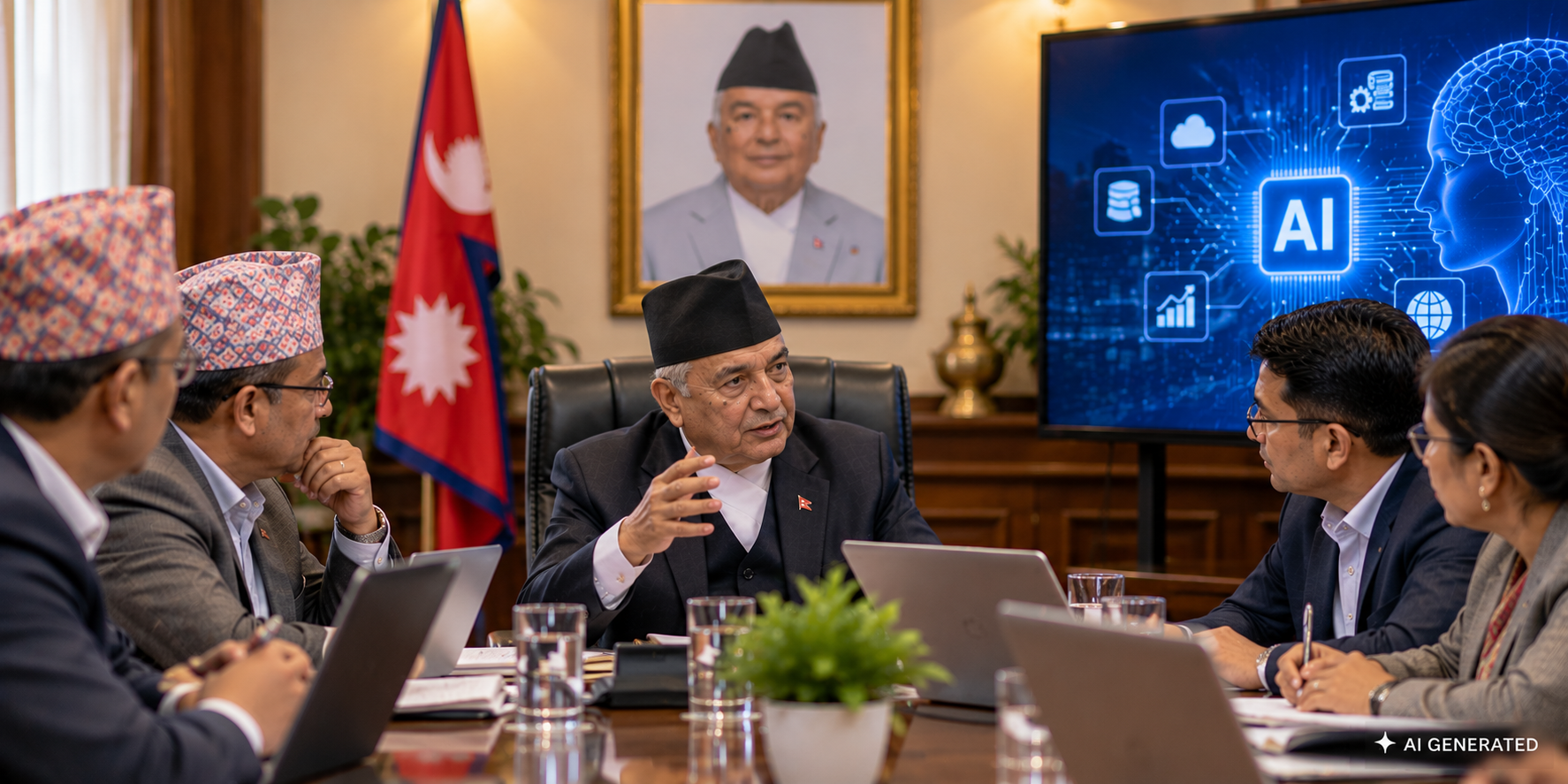
A major feature is the Digital Governance and Information Technology Division, which includes separate Information Technology and AI and Emerging Technology branches. The division will work on IT and digital-governance policies, cybersecurity, data security and governance, Critical Information Infrastructure, Digital Public Infrastructure and digital transformation across sectors including education, health, agriculture, tourism, industry, trade and payments. The AI branch has been tasked with policy work for the research, development and ethical use of artificial intelligence, coordination with universities and research institutions, and policies concerning data centres, cloud infrastructure and digital platforms.
The AI and Emerging Technology Branch will also facilitate data exchange and interoperability among government digital systems, encourage IT startups and innovation, support research and development, develop policies for domain management and strengthen critical information, data-centre, cloud and network infrastructure. It will additionally coordinate technology partnerships and knowledge exchange with regional and international institutions.
On development management, the PMO will oversee national-pride and priority projects, analyse government policies and results, operate the PM Delivery Unit, coordinate the Integrated Monitoring System and establish and operate a Policy Lab to strengthen policy formulation, implementation, monitoring and evaluation. The document also assigns high-level coordination roles covering economic and social development, infrastructure, foreign investment and assistance, disaster management and climate adaptation.