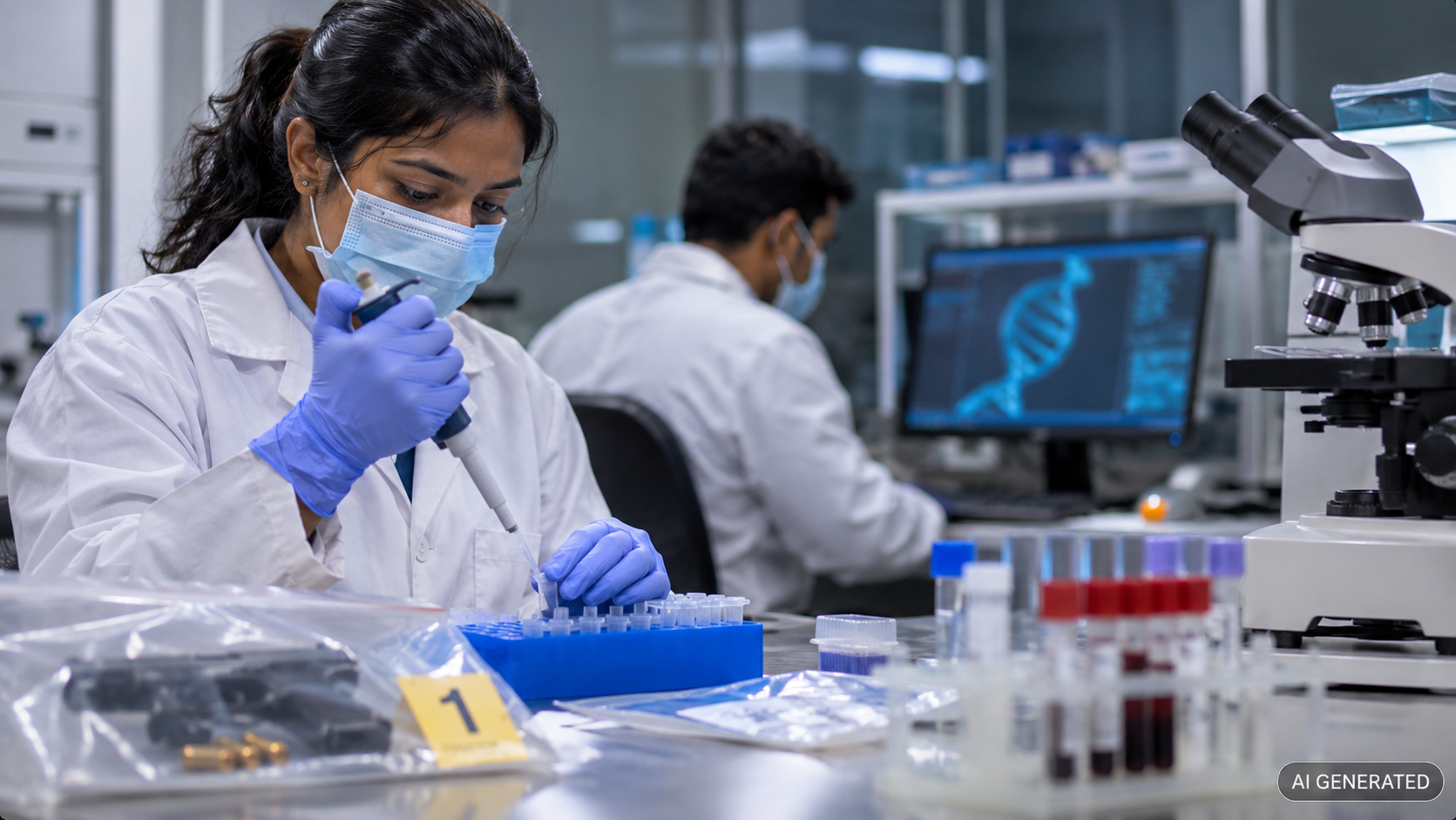
The Government of Nepal has introduced the National Forensic Science Laboratory (Establishment and Operation) Act, 2083, establishing a comprehensive legal and institutional framework for the scientific examination, preservation, and analysis of evidence used in criminal investigations and judicial proceedings. Published in the Nepal Gazette following its authentication on Ashoj 30, 2083 BS, the legislation aims to strengthen the reliability of forensic evidence and improve access to scientific examination services across the country. The 36-section law provides for the establishment of the National Forensic Science Laboratory as an autonomous and organized institution with legal personality, capable of acquiring property, entering agreements, and performing its statutory responsibilities. The laboratory’s central office will be located in Kathmandu Valley, with provisions allowing branch laboratories in all seven provinces. The institution will conduct scientific examinations of biological materials, physical evidence, digital and electronic materials, and other forensic samples submitted by courts, investigative authorities, and authorized institutions.
A major provision of the legislation is the establishment of a national DNA database to support criminal investigations and identification procedures. Under Sections 16–19, the laboratory is authorized to establish and operate a DNA database containing profiles obtained from forensic examinations, including records used for identifying missing persons and unidentified human remains. The law allows authorized investigative and judicial bodies to request DNA-related information for legally permitted investigations and proceedings. However, it also introduces safeguards concerning the collection, storage, use, and confidentiality of genetic information. DNA profiles may be removed from the database under specified circumstances, including legally established conditions involving acquittals and identification-related records. The legislation further requires the laboratory to maintain secure records and restrict access to authorized individuals or institutions, while establishing procedures for conducting scientific examinations, preserving evidence, issuing forensic reports, and maintaining examination standards.
The Act establishes a governing committee chaired by the Secretary of the Ministry of Law, Justice and Parliamentary Affairs, with representatives from relevant scientific, academic, and governmental institutions responsible for providing policy direction and institutional oversight. It also provides for the appointment of an Executive Director as the laboratory’s administrative head, with a four-year tenure and eligibility for one reappointment. The Executive Director must possess relevant academic qualifications and professional experience in forensic science or related scientific disciplines, as specified in the legislation. The laboratory is authorized to conduct research, provide specialized forensic training, collaborate with domestic and international institutions, develop scientific examination procedures, and recommend technical improvements to the government. The law also provides for a dedicated institutional fund supported by government grants, service charges, training income, and other legally permitted contributions, alongside requirements for accounting, auditing, annual reporting, and financial accountability.
The legislation establishes detailed provisions for forensic testing procedures, expert opinions, sample preservation, re-examination, laboratory management, and scientific quality assurance. Courts and investigative authorities may request scientific testing, while the laboratory may provide forensic reports and expert findings to support judicial proceedings. Individuals or institutions may also request certain examinations under prescribed conditions, subject to applicable fees and regulations. The law allows the laboratory to develop technical standards, collaborate with academic institutions, and undertake research to improve forensic examination capabilities. It also provides for the transition of existing functions, resources, and responsibilities from the National Forensic Science Laboratory Development Committee established under the previous framework. The new law is intended to improve the scientific reliability of evidence, strengthen criminal justice administration, expand forensic services beyond Kathmandu, and provide clearer legal safeguards for handling sensitive forensic information. Its effective implementation will depend on adequate laboratory infrastructure, trained scientific personnel, institutional coordination, and the development of necessary regulations and operating procedures.