The Government of Nepal has approved the Hydrology and Meteorology Policy, 2081, establishing a national policy framework to strengthen weather forecasting, hydrological monitoring and climate-related disaster risk management. According to the 20-page document issued through the Office of the Prime Minister and Council of Ministers, the policy was approved following consideration by the Cabinet’s Economic and Infrastructure Committee. It aims to improve the collection, analysis, storage and dissemination of hydrological and meteorological information while promoting evidence-based decision-making. The policy emphasizes modernizing observation infrastructure, expanding monitoring networks and improving public access to reliable weather and water-related information.
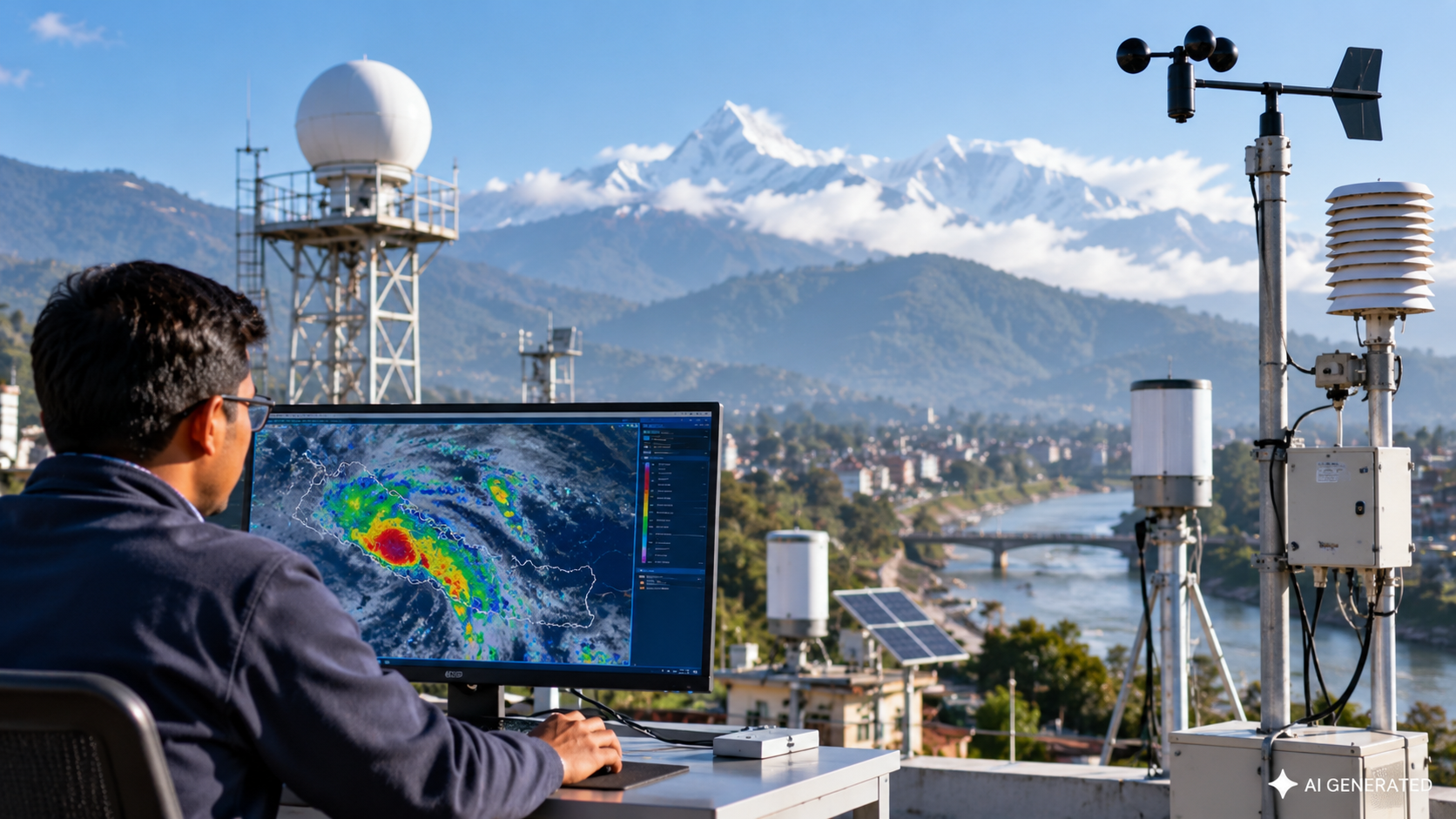
A major priority of the policy is the development of advanced forecasting and early warning systems for floods, landslides and other weather-related hazards. The government plans to strengthen weather radar networks, hydrological and meteorological stations, remote sensing, numerical weather prediction and specialized forecasting technologies. It also proposes improving impact-based forecasting, community-level warning dissemination and disaster preparedness, alongside research on climate change, glaciers, snow cover and high-altitude hydrological conditions. The framework includes provisions for improved data management, quality assurance, technical research and coordination among federal, provincial and local authorities to strengthen Nepal’s capacity to respond to extreme weather events.
The policy further emphasizes international cooperation, institutional capacity development and sustainable financing for hydrological and meteorological services. It promotes collaboration with international organizations, research institutions and development partners, while encouraging public-private partnerships, cost-recovery mechanisms and technological innovation. Additional priorities include improving agricultural weather services, supporting aviation and infrastructure planning, strengthening water resource management and developing climate information services for vulnerable communities. The government also intends to expand technical training, scientific research and professional development to improve the quality and accessibility of hydrological and meteorological services.
The document outlines implementation arrangements, monitoring and evaluation mechanisms, institutional responsibilities and financial management provisions to support the policy’s objectives. It encourages the development of action plans, intergovernmental coordination and regular assessment of implementation progress. However, the policy’s approval does not establish that all proposed forecasting technologies, observation stations or early warning systems have already been installed or implemented. The initiative represents a framework for modernizing Nepal’s hydrological and meteorological services and strengthening national resilience against climate-related disasters.