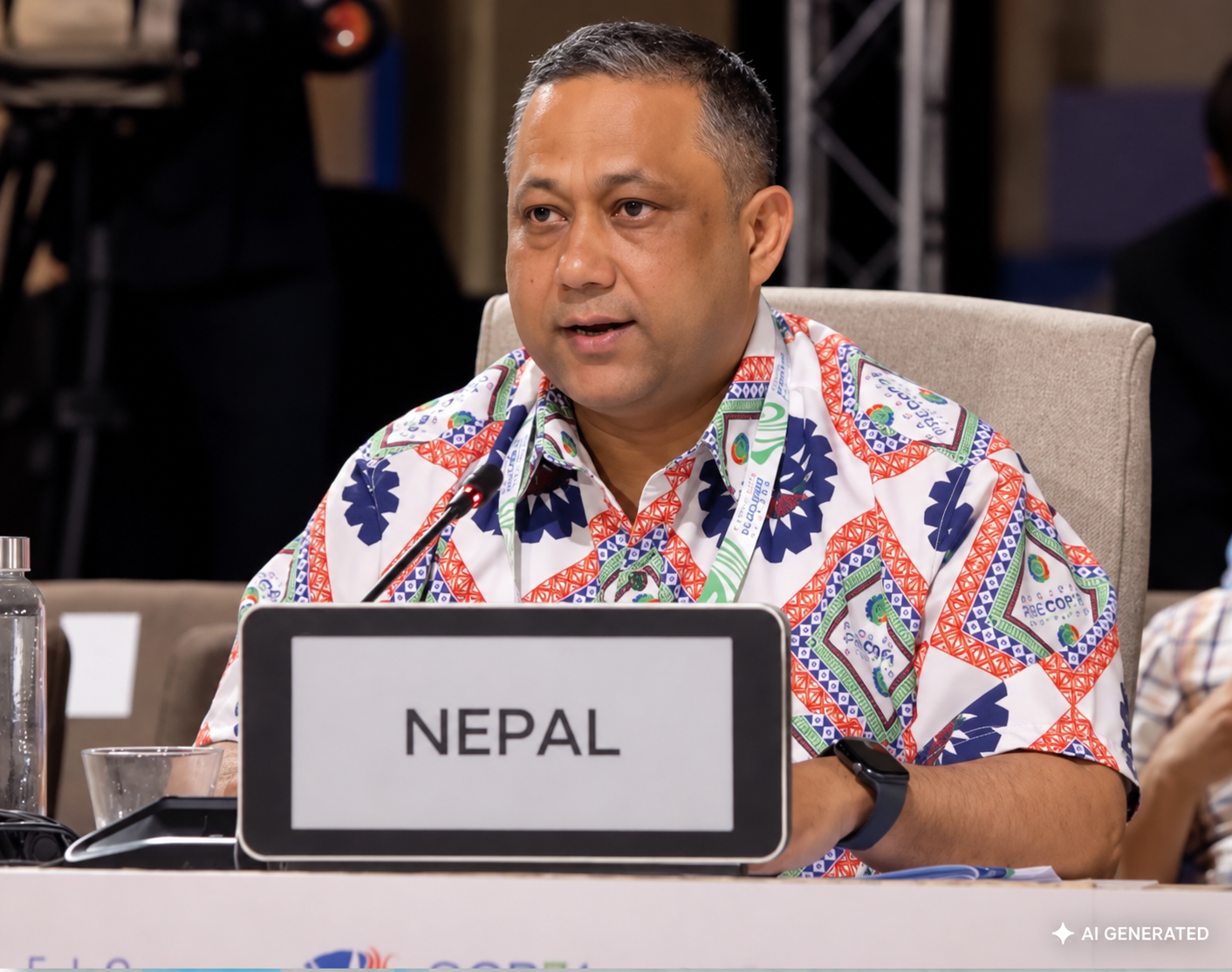
Addressing the Pre-COP Leaders’ Event in Fiji on October 6, Foreign Minister Shishir Khanal said Nepal and Pacific island nations stand on the same ecological frontline despite their vastly different geography. Linking the Himalayas with rising seas, he argued that melting mountain ice, changing river systems and sea-level rise are part of one connected climate system, making cooperation between mountain and ocean states increasingly important.
Khanal referred to the recent Bhote Koshi disaster as a “Himalayan Tsunami,” saying the high-altitude collapse and resulting flood demonstrated how rapidly climate-related hazards can destroy lives, infrastructure, hydropower facilities and communities. He contrasted Nepal’s low contribution to global emissions with the scale of climate losses it faces and described this imbalance as a clear case of climate injustice.
Ahead of COP31, Nepal called for strict adherence to the 1.5°C temperature goal, predictable and grant-based adaptation finance, and a fully capitalized Loss and Damage Fund with fewer bureaucratic barriers for vulnerable countries. Khanal also proposed a formal “Sagarmatha to the Sea” partnership linking mountain and Pacific communities through knowledge-sharing, cooperation and joint advocacy.
Invoking Fiji’s tradition of Solesolevaki and Nepal’s tradition of Shramadāna, Khanal urged mountain and island nations to turn shared vulnerability into collective climate action. He said Nepal would continue highlighting the risks of sea-level rise while encouraging Pacific countries to also raise global attention to melting Himalayan ice, building a stronger common voice on climate justice.