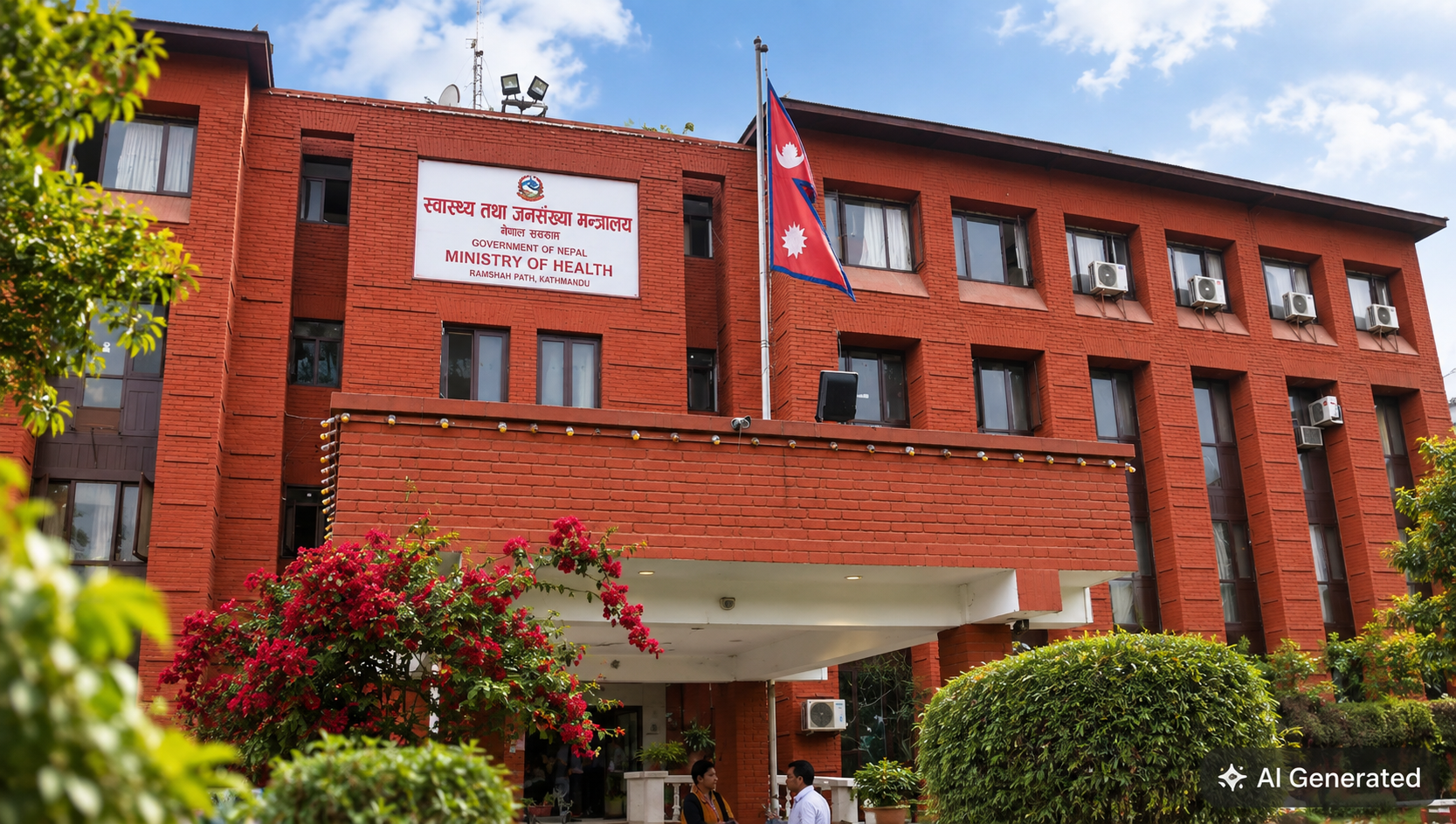
The Ministry of Health and Food Hygiene has opened the draft Health Insurance (First Amendment) Act, 2083 for public consultation following a ministerial-level decision on Shrawan 19, 2083. Citizens and stakeholders may submit comments to law.section@mohp.gov.np within seven days, by Shrawan 25, 2083. The bill would make participation mandatory for groups including public servants, teachers, security personnel, employees of public institutions, organized private-sector workers, bank and financial institution employees, labourers, foreign-employment workers and their families. It would also allow certain targeted groups, single individuals and formally employed persons to enroll as individual units rather than only through a family unit.
A major reform is the introduction of a defined “benefit package”, covering approved health services, treatment, diagnostic tests, medicines, devices and payment rates. The Health Insurance Board would develop and periodically revise the package using actual cost calculations, market prices, hospital level, service complexity, health-technology assessment, actuarial analysis and budget-impact analysis. Covered services would include outpatient, emergency, inpatient, diagnostic, surgical, medicine and assistive-device services beyond basic healthcare. Provider agreements could run for up to three years, at least one first-service-point provider would be required in every district, and insured persons could receive initial care from any Board-designated first service point nationwide.
The draft also modernizes how providers are paid, allowing methods such as capitation, fee-for-service, case-based payment and diagnosis-related groups, with claims assessed against the benefit package, medical necessity and service quality. It broadens eligible service providers to include federal and provincial hospitals, health science academies, teaching hospitals, private hospitals, and qualifying community, cooperative and nonprofit institutions. The bill also creates a formal recruitment committee for Health Insurance Board staff and revises qualification requirements for Board leadership, including postgraduate education and minimum professional experience.
To strengthen financing and accountability, the amendment proposes directing a government-determined share of health-risk taxes collected from tobacco, alcohol, junk food, sugary foods and drinks, high-salt products and processed foods high in sugar or fat toward health insurance. Government social-protection and health-subsidy programmes would increasingly be operated through the Board. Fraudulent claims, forged records, collusion, unnecessary referrals, failure to provide contracted services, delays and substandard care would become explicit offences. Penalties include recovery of misused amounts with double-value fines, fines of up to Rs 500,000 for certain provider violations, and compensation of Rs 15,000–25,000 to insured persons in specified service-failure cases, alongside additional penalties and possible departmental action against responsible public officials.