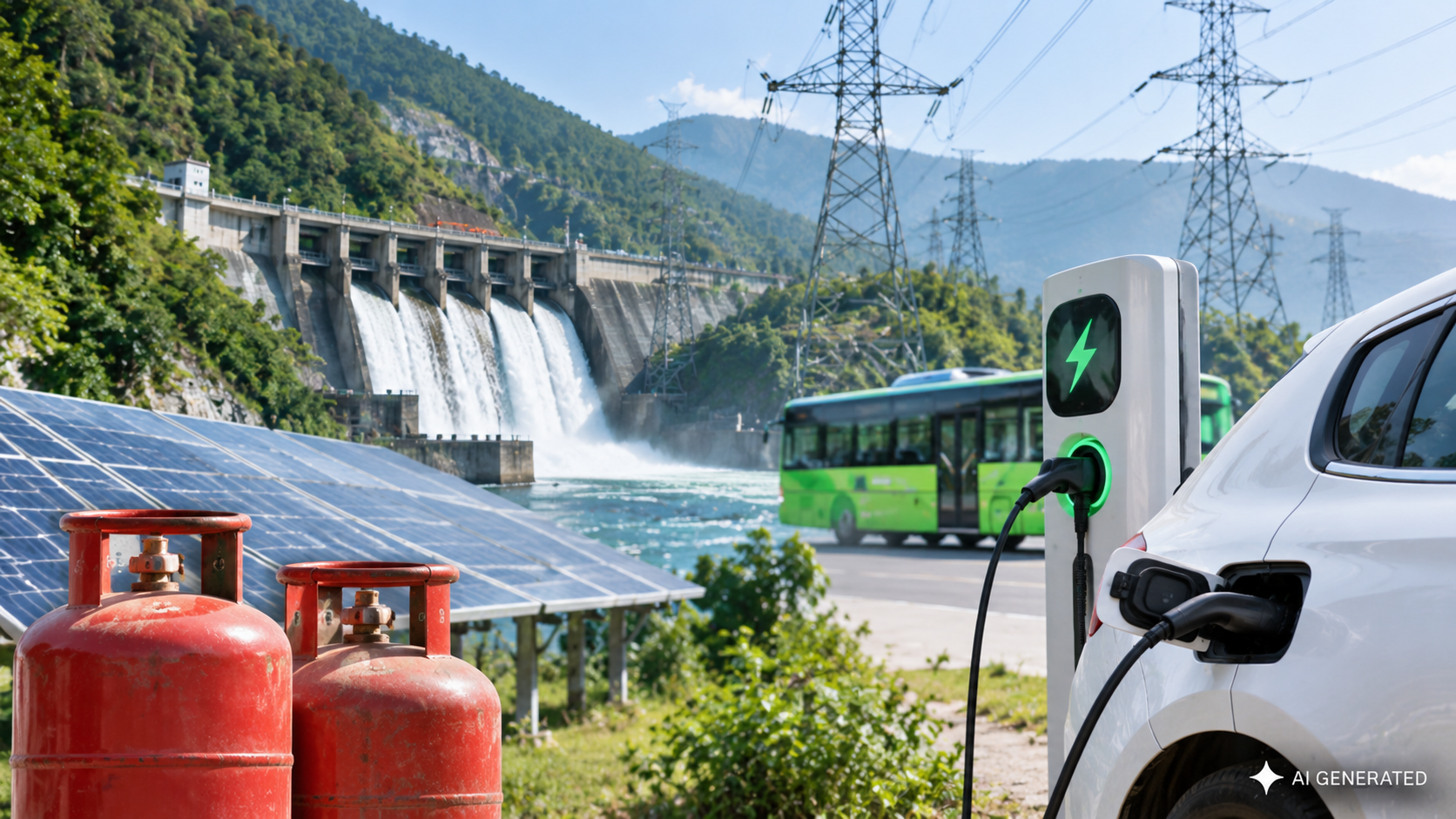
The Government of Nepal has prepared the Energy Consumption Enhancement and Export Strategy, 2083, a comprehensive 22-page strategic framework covering fiscal years 2082/83 to 2092/93, aimed at transforming Nepal into a regional clean energy hub. Prepared by the Ministry of Energy, Water Resources and Irrigation, the strategy targets 28,500 MW of installed electricity generation capacity by 2035, comprising approximately 13,500 MW for domestic consumption and 15,000 MW of export capacity. The document reports Nepal’s existing installed capacity at approximately 4,086 MW, electricity access at around 98 percent of the population, and annual per capita electricity consumption at approximately 450 units. To address seasonal electricity shortages and surplus generation, the government proposes prioritizing reservoir-based, semi-reservoir, pumped-storage and battery-storage projects while strengthening electricity transmission and distribution systems. The strategy also seeks to increase per capita electricity consumption to 1,500 kWh annually and ensure reliable electricity access nationwide.
A major component of the strategy involves reducing dependence on imported fossil fuels and increasing electricity consumption across households, transportation, agriculture and industries. The government proposes gradually eliminating LPG subsidies and introducing incentives for electric cooking, while progressively encouraging the use of electric appliances in government offices, security agencies and public institutions. The action plan also includes expanding electric vehicle charging infrastructure nationwide, promoting electric buses and trolleybuses, supporting the conversion of petroleum-powered vehicles to electric technology, and replacing conventional electricity meters with smart meters. For industries, the strategy proposes special electricity tariffs for energy-intensive businesses, including chemical fertilizer factories, modern brick kilns and data centres. In agriculture, it outlines dedicated electricity feeders, subsidized agricultural electricity tariffs, electrification of irrigation equipment and a target to convert 100 percent of irrigation pumps to electric power by fiscal year 2092/93.
The strategy’s detailed action plan, presented on pages 12–22, identifies major hydropower and transmission projects with proposed implementation deadlines. Priority generation projects include the 1,200 MW Budhigandaki Reservoir Hydropower Project, 1,061 MW Upper Arun, 670 MW Dudhkoshi Reservoir Project, 828 MW Uttarganga, 417 MW Nalgad, 439 MW Betan Karnali and 281 MW Naumure Multipurpose Project. It also includes more than 1,000 MW of solar photovoltaic development, approximately 3,500 MW of additional projects promoted by government companies and Nepal Electricity Authority subsidiaries, and around 14,000 MW of privately developed projects, contributing to a planned 24,500 MW increase in generation capacity by 2035. Transmission priorities include multiple 400 kV domestic and cross-border lines, notably Butwal–Gorakhpur, Dhalkebar–Muzaffarpur, Inaruwa–Purnea and connections toward China, alongside a target to expand substation capacity to 40,000 MVA. The strategy also emphasizes exporting surplus electricity during high-price peak-demand periods, participating in India’s Day-Ahead and Real-Time electricity markets, and encouraging private-sector participation in electricity trading and transmission infrastructure.
To support implementation, the ministry proposes legal reforms, restructuring of the Nepal Electricity Authority, revision of electricity trading regulations and stronger coordination among government agencies. The action plan sets deadlines of six months for preparing an electricity policy, one year for amending and consolidating electricity-related laws, 180 days for decisions concerning Power Purchase Agreements (PPAs) and licensing, and two years for NEA restructuring. The strategy identifies climate-related disasters, financial constraints, land acquisition disputes, transmission infrastructure limitations and cybersecurity threats as major implementation risks, proposing climate-resilient designs, green financing, improved project coordination and modern grid security measures. A ministry-led monitoring committee would review implementation progress quarterly. The document establishes proposed targets, programmes and implementation schedules rather than confirming that the planned projects, reforms or electricity export commitments have already been completed.