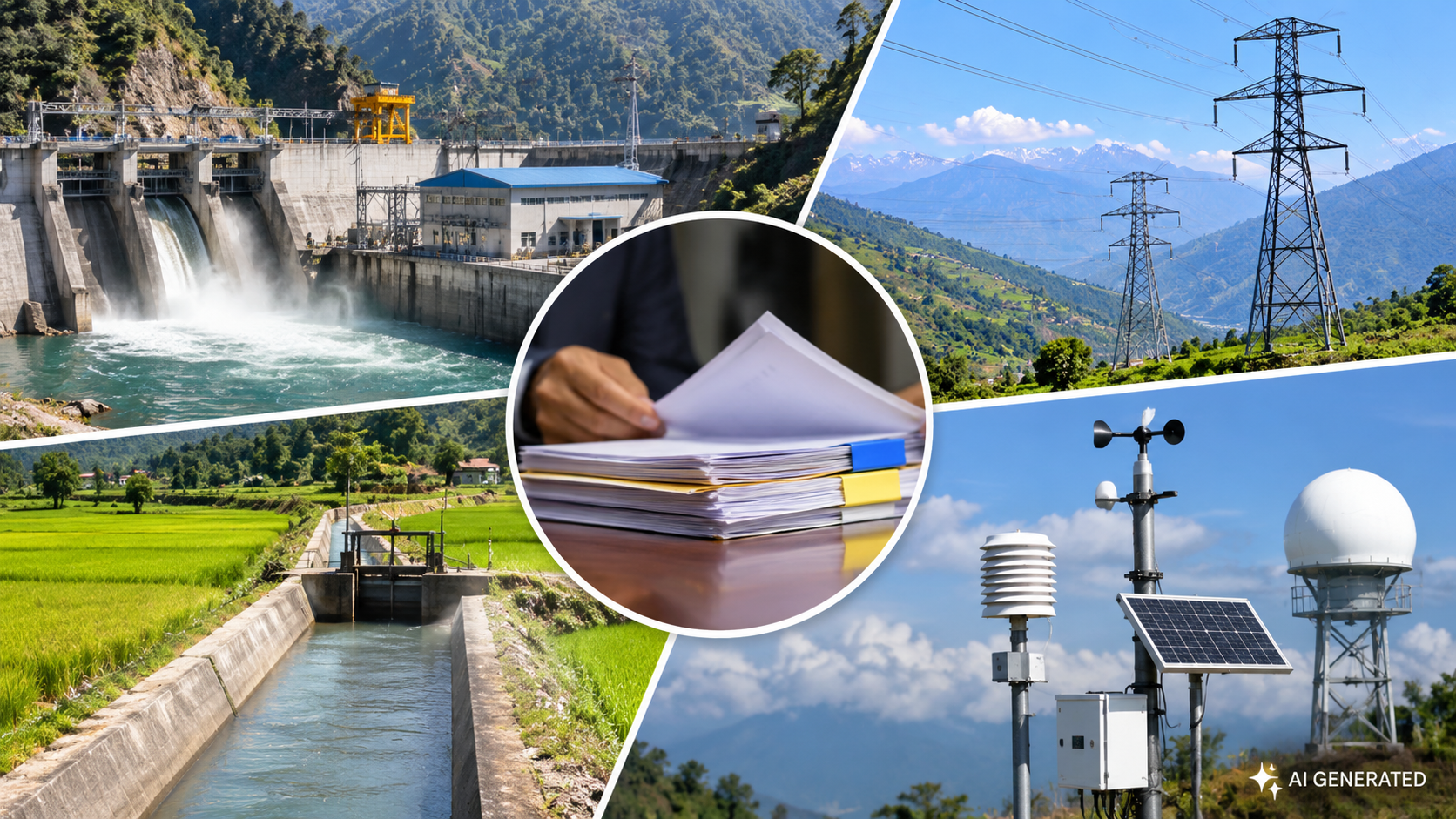
The Government of Nepal’s Ministry of Energy, Water Resources and Irrigation has published a 10-page institutional progress and information disclosure report covering Magh 1 to the end of Chaitra 2082 BS, in accordance with Section 5(3) of the Right to Information Act, 2064, and Rule 3 of the Right to Information Regulations, 2065. The report outlines the ministry’s organizational structure, responsibilities, subordinate agencies, major national projects, public service procedures and administrative accountability arrangements. It also presents progress in electricity generation, transmission development, irrigation infrastructure and hydrological and meteorological services. The ministry identifies major agencies under its jurisdiction, including the Nepal Electricity Authority, Department of Electricity Development, Department of Water Resources and Irrigation, and Department of Hydrology and Meteorology.
According to the energy-sector progress figures presented on page 9, Nepal has continued expanding its electricity generation and transmission infrastructure. The report provides cumulative figures for installed electricity generation capacity, transmission lines, substations, electricity access, exports and imports. It states that approximately 99 percent of the population has access to electricity through the national grid and alternative energy sources, while transmission infrastructure exceeding 66 kV has expanded to approximately 7,260 circuit kilometres. It also highlights ongoing development of substations, improvements in electricity supply and the contribution of solar and small-scale hydropower projects to national generation capacity.
The report also documents significant developments in irrigation and weather monitoring infrastructure. On page 10, the Department of Water Resources and Irrigation provides cumulative figures for surface, groundwater, lift and reservoir-based irrigation facilities, along with progress in river embankment and flood protection works. The Department of Hydrology and Meteorology reports the establishment and operation of 112 automatic hydrological monitoring stations, 354 automatic weather monitoring stations and three weather radar systems. These facilities support the collection of weather and river-flow information used for forecasting, monitoring and disaster preparedness.
Regarding transparency and public accountability, the ministry reports receiving three requests for information during the reporting period, all of which were processed and addressed according to applicable procedures. The document also identifies the ministry’s responsible secretaries, spokesperson and information officer, while listing relevant laws, regulations, directives and major projects under its jurisdiction. The publication serves as a statutory disclosure of institutional activities and cumulative sectoral achievements rather than an announcement of newly approved projects or additional budget allocations, reinforcing the ministry’s responsibility to provide public access to government information.