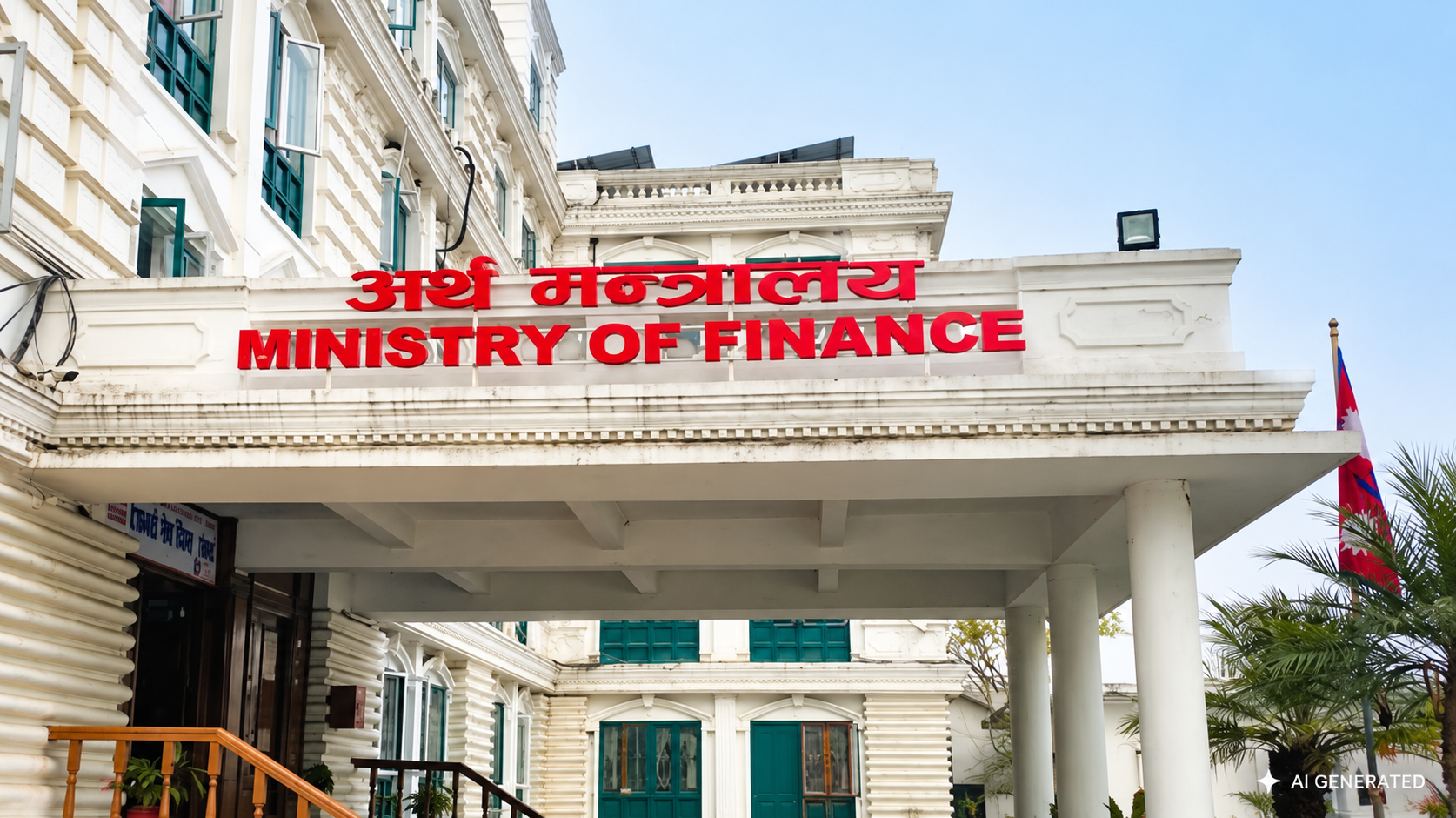
Nepal’s Economic Review Bulletin for Shrawan 2083 shows a mixed but broadly positive start to fiscal year 2083/84. Federal revenue collection rose 8.8% year-on-year to Rs 92.22 billion, while total federal expenditure fell 9.5% to Rs 41.89 billion, mainly due to lower principal repayment on domestic debt. Outstanding public debt stood at Rs 2.976 trillion, equivalent to 45.1% of GDP.
The external sector strengthened significantly. Merchandise exports surged 61.7% to Rs 38.70 billion, while imports increased 31.0% to Rs 187.44 billion. Despite stronger exports, the trade deficit widened 24.9% to Rs 148.74 billion. Remittance inflows grew 21.2% to Rs 215.05 billion, while the current account posted a Rs 94.59 billion surplus and the balance of payments remained in surplus by Rs 90.34 billion. Foreign exchange reserves climbed to Rs 3.946 trillion, sufficient to cover 21.8 months of merchandise imports.
Price and financial-sector pressures also increased. Annual consumer inflation rose sharply to 5.96%, up from 1.68% a year earlier, driven partly by a 6.77% rise in food and beverage prices. Deposits grew 14.5% year-on-year and private-sector credit by 7.0%, while lending rates continued to fall; however, the non-performing loan ratio increased to 5.66% from 4.62%, indicating rising asset-quality risks in the banking system.
Other indicators were mixed. Insurance coverage expanded to 52.35% of the population and premium collection jumped 31.2% to Rs 32.02 billion, while the NEPSE index declined to 2,643.84 points, down 5.2% year-on-year. The Finance Ministry concluded that while revenue, remittances and external stability have improved, policymakers still need to address the widening trade deficit, higher inflation, weak capital-market performance and more effective capital expenditure in the months ahead.