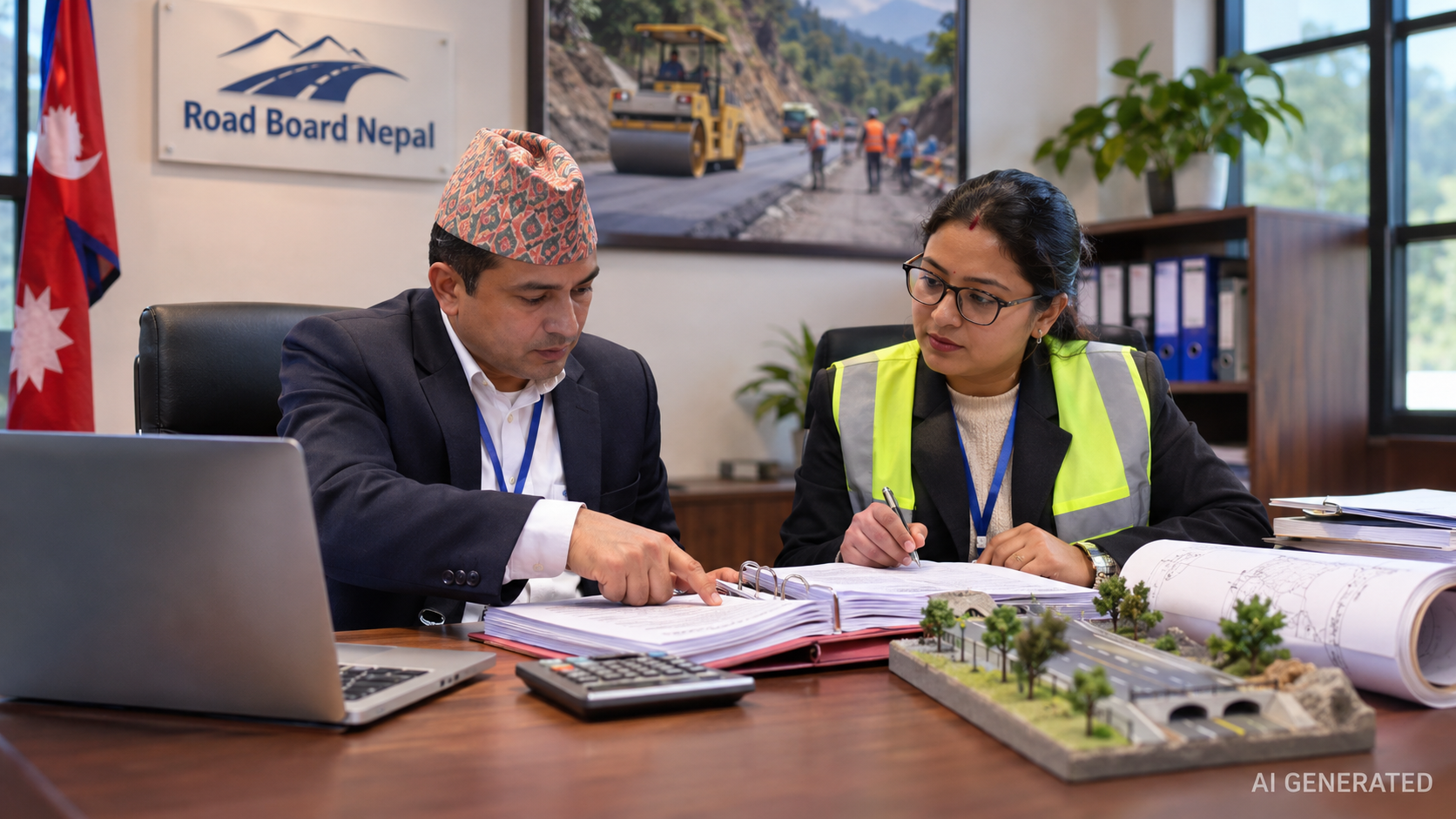
Road Board Nepal’s Financial Administration Regulations establish detailed procedures governing the board’s financial management, budgeting, accounting, expenditure authorization, and institutional oversight. The 21-page document outlines arrangements for administering the board’s financial resources in accordance with the Road Board Act, 2058, and applicable government requirements. The regulations address the management of funds received from different sources, including government allocations and other authorized revenues, while specifying responsibilities for financial planning and expenditure control. They also establish requirements for preparing annual budgets, approving financial programs, managing institutional bank accounts, and ensuring that expenditures remain within authorized financial limits. The framework seeks to promote transparency, financial discipline, and responsible resource utilization in the administration of Nepal’s road maintenance financing system.
A major component of the regulations concerns budget preparation, expenditure authorization, procurement procedures, and financial transactions. The document establishes procedures for allocating and releasing funds, approving expenditures, maintaining supporting documents, and undertaking the procurement of goods, services, and construction-related works. It includes provisions for competitive bidding, quotation-based procurement, contractual arrangements, advance payments, and the settlement of financial liabilities. The regulations also address the responsibilities of officials involved in approving payments and managing public resources, requiring expenditures to follow approved budgets and established procedures. Special attention is given to financial controls intended to prevent unauthorized spending, irregular transactions, and the misuse of institutional funds. These arrangements are particularly relevant to Road Board Nepal’s role in mobilizing and allocating financial resources for road maintenance and infrastructure-related activities.
The regulations further introduce accounting, internal control, auditing, inventory management, and financial reporting requirements to strengthen institutional accountability. Financial records must be maintained in accordance with prescribed procedures, while transactions are subject to verification, documentation, and applicable auditing requirements. The document addresses the management of institutional assets, including the purchase, registration, storage, inspection, transfer, and disposal of government-funded materials and equipment. It also contains provisions concerning the settlement of advances, recovery of outstanding amounts, handling of financial irregularities, and responsibilities for safeguarding public assets. Notably, the financial approval and delegation arrangements illustrated in the table on pages 18–19 distinguish different categories of officials and their financial authority, helping define responsibility for expenditure decisions and administrative transactions.
The framework also outlines procedures for financial supervision, contract administration, recovery of dues, and corrective action in cases involving financial irregularities. Officials responsible for financial administration are required to maintain accurate records, follow approved accounting practices, and ensure that financial transactions comply with institutional regulations. The document provides arrangements for reviewing expenditures, managing outstanding financial obligations, and addressing situations where funds are spent improperly or financial procedures are not followed. Through these provisions, the regulations seek to strengthen financial transparency, improve administrative efficiency, and support responsible management of resources intended for Nepal’s road sector. The document is an existing regulatory framework rather than a newly announced budget, procurement opportunity, or financial policy reform, and the supplied copy does not establish whether all its original provisions remain unchanged or currently applicable. Its significance lies in defining the financial administration standards and accountability mechanisms governing Road Board Nepal’s operations.