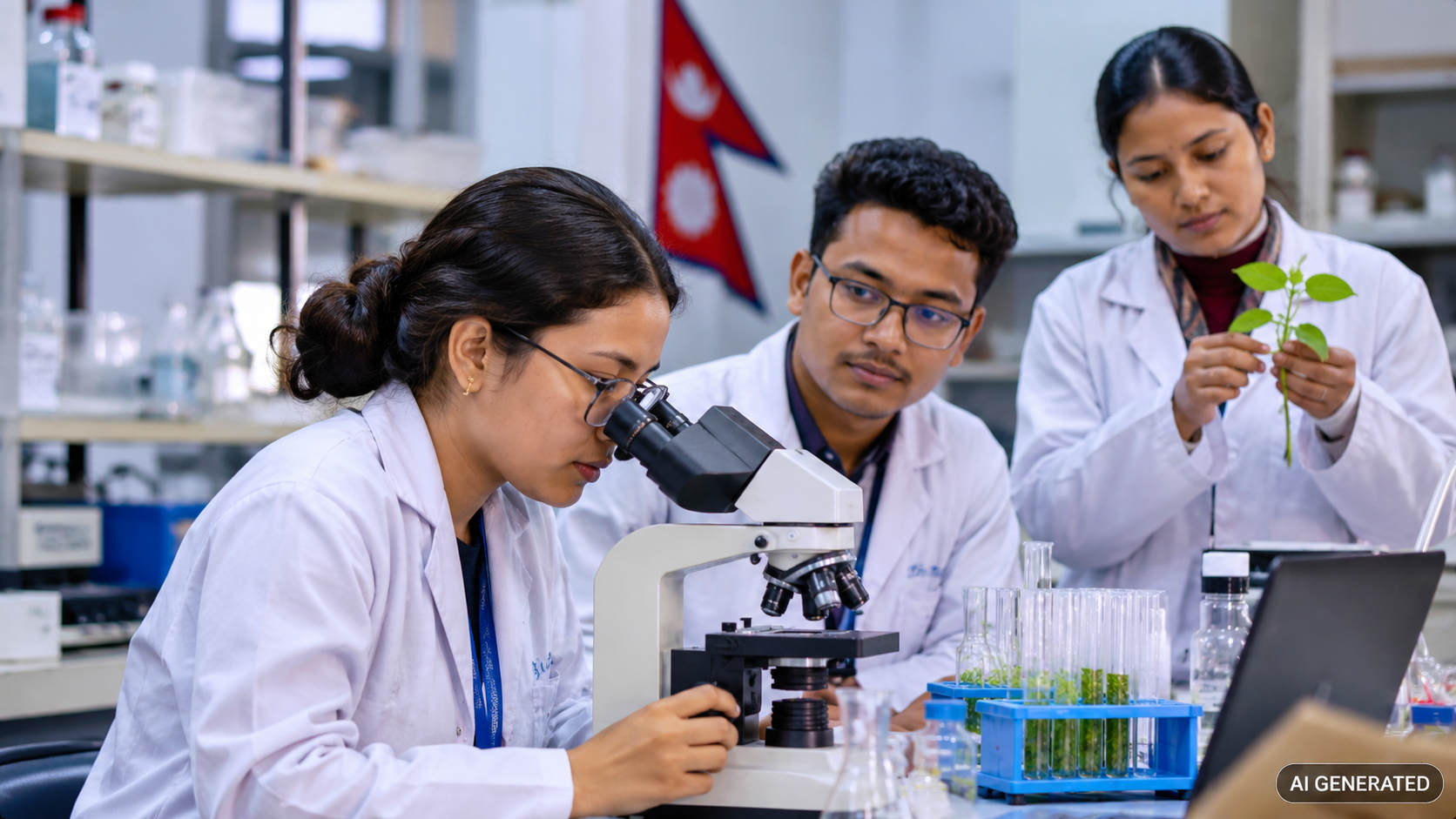
The Ministry of Science, Technology and Innovation has introduced the Scientific, Technological and Innovative Program Grant Implementation Procedures, 2083, aimed at strengthening scientific research, technological development, and innovation across Nepal. Developed under the Financial Procedures and Fiscal Responsibility Act, 2076, the procedures establish a structured system for providing government financial assistance to research institutions, universities, scientific organizations, and other eligible applicants engaged in research and innovation. The framework seeks to identify national research priorities, promote practical applications of scientific knowledge, support evidence-based technological development, and encourage cooperation between academic institutions, government agencies, and the private sector. It also emphasizes improving research quality, strengthening institutional research capacity, and ensuring that publicly funded projects generate measurable outcomes contributing to Nepal’s socioeconomic development.
The procedures identify 10 priority research sectors, including information technology and digital transformation, agriculture and food security, healthcare, education, energy, tourism, environmental management and climate change, natural resource management, infrastructure development and emerging technologies, and other relevant scientific fields. Under the framework, interested institutions and researchers must submit research proposals through the ministry’s prescribed application process, outlining project objectives, research methodology, expected outcomes, implementation schedules, required resources, and estimated budgets. Proposals must also identify the research team, institutional affiliations, previous research experience, and potential benefits of the proposed activities. The ministry will evaluate submissions based on scientific relevance, technical feasibility, innovation potential, institutional capacity, proposed expenditure, and expected contributions to national development priorities.
To ensure transparent selection, the guidelines provide for an expert evaluation committee responsible for reviewing research proposals and recommending suitable projects for government support. Applicants may be required to present their proposals and provide additional clarification or supporting documents during the evaluation process. Selected researchers and institutions must enter into formal grant agreements specifying approved activities, financial arrangements, implementation responsibilities, reporting requirements, and expected deliverables. The procedures also establish provisions for monitoring project progress, assessing research quality, evaluating financial expenditure, and verifying whether activities are being implemented according to the approved research plan. Research grant recipients are expected to maintain proper records, submit periodic progress reports, and provide final research findings, including evidence of completed activities and expenditures.
The framework further emphasizes financial accountability, research integrity, intellectual property protection, and the practical utilization of research outcomes. Grant recipients must use public funds exclusively for approved research activities and comply with applicable financial and administrative regulations. The ministry may monitor ongoing projects, request additional documentation, assess research deliverables, and take action where grant conditions are violated or funds are misused. The procedures also include prescribed formats for proposal submission, project evaluation, financial reporting, research progress assessments, and final research reports. Importantly, the framework recognizes both conventional scientific research and emerging fields, including generative artificial intelligence, as areas requiring appropriate research documentation and evaluation. Through these measures, the government aims to strengthen Nepal’s research ecosystem, improve the effectiveness of public research investment, encourage collaboration among scientific institutions, and support the development of innovative technologies with practical economic and social applications.