The Ministry of Women, Children, Gender and Sexual Minorities, and Social Security has released its daily update on flood and humanitarian crisis response activities, highlighting the growing humanitarian impact of recent disasters across Nepal. According to the ministry’s preliminary information, approximately 65,000 people have been affected, including around 22,000 children. The update records 8,630 people rescued, 8,658 deaths, 217 injuries, and thousands of displaced individuals accommodated in holding centres and institutional shelters. The ministry stated that information collection, verification, and coordination are continuing to identify vulnerable individuals and ensure timely humanitarian assistance.
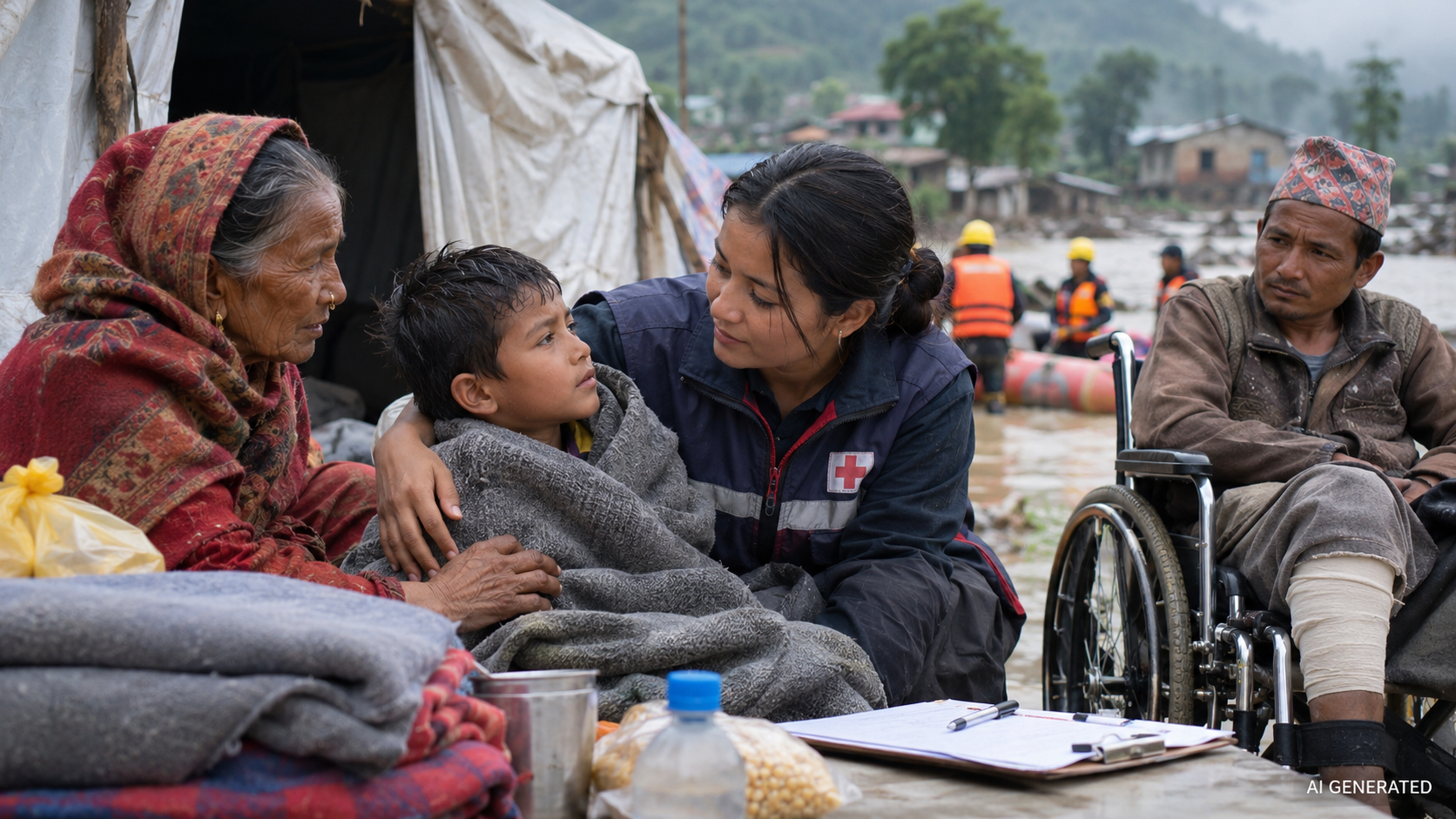
The ministry has prepared operational guidelines for establishing temporary child screening and protection centres to assist children separated from their families, those whose parents or guardians remain unidentified, and children requiring immediate protection. The proposed centres will prioritize safe accommodation, family tracing, reunification, and appropriate referral to legally recognized childcare institutions when necessary. Preparations are underway to establish such a centre in coordination with local authorities in Kathmandu. Meanwhile, authorities have been collecting information on disaster-affected persons with disabilities, including individuals requiring urgent medical attention, assistive services, and rehabilitation. The ministry reported receiving information on 60 individuals with disabilities and coordinating with relevant agencies to facilitate assistance, including preparations to deploy 20 wheelchairs for emergency needs.
The ministry has also strengthened coordination for the rescue, protection, and rehabilitation of senior citizens in disaster-affected districts, including Rasuwa, Nuwakot, Dhading, Chitwan, Gorkha, and Tanahun. Officials are working with elderly care homes, local authorities, and relevant organizations to assess conditions and arrange healthcare, psychological support, shelter, and other essential services. In response to the emotional and psychological impact of the disaster, psychosocial counselling and Psychological First Aid (PFA) services have been initiated at Chyalo Gumba from Bhadra 15, 2083. These services are being provided under the supervision of a senior psychological counsellor, with additional counselling available in Tibetan when necessary.
Humanitarian relief distribution has continued through coordination between the ministry, government agencies, and national and international non-governmental organizations. According to the update, 60 CP4E sets and 120 blankets were distributed or made available in Nuwakot, while relief supplies such as rice, lentils, salt, sugar, food items, and kitchen sets were provided in Rasuwa. The ministry emphasized that identifying vulnerable groups, ensuring safe accommodation, delivering healthcare and psychosocial support, and facilitating family reunification remain central priorities. It has directed continued coordination among government agencies, local authorities, the National Child Rights Council, protection clusters, and humanitarian organizations to improve the effectiveness of emergency response and rehabilitation efforts.