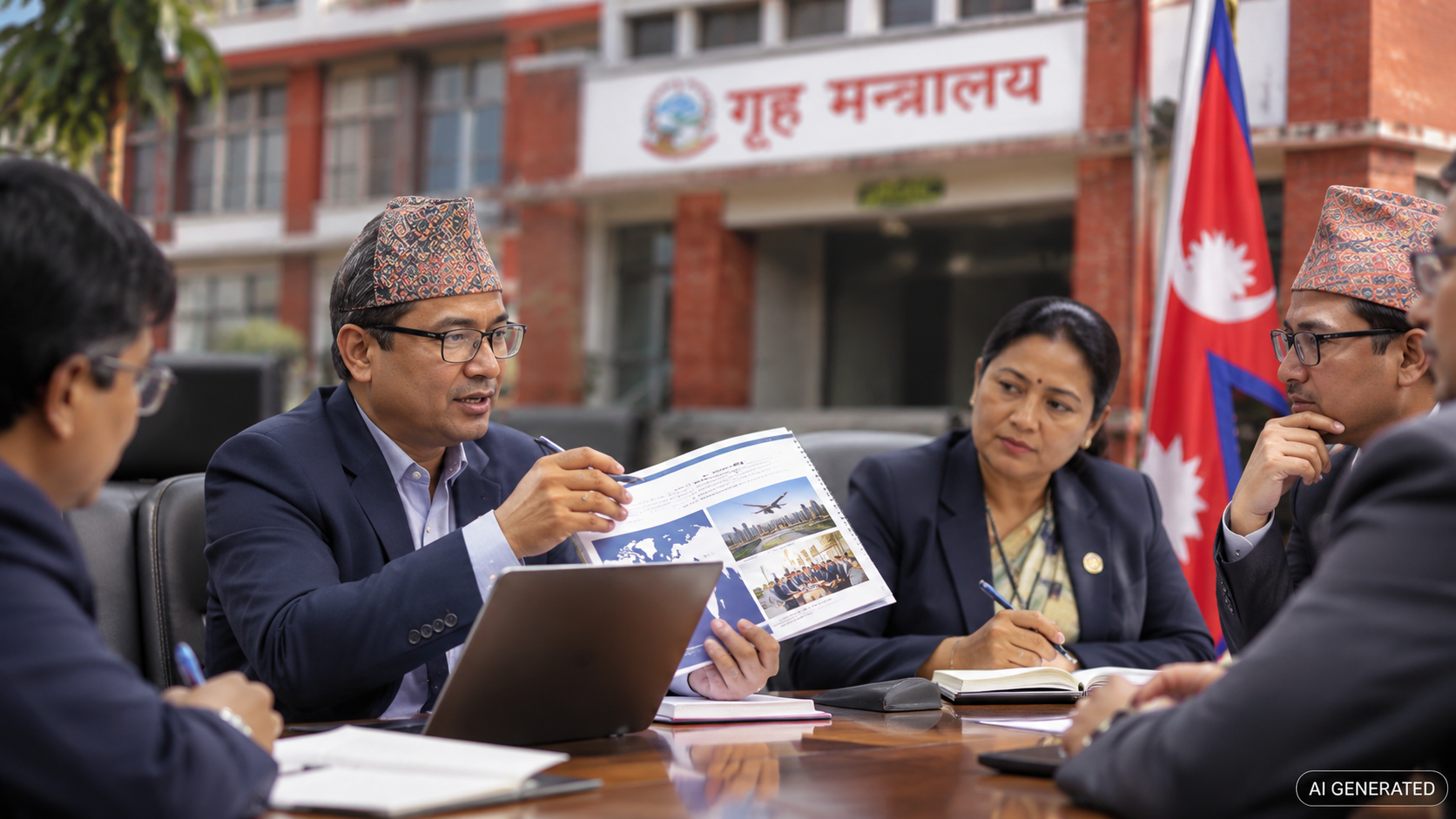
The Ministry of Home Affairs has issued the Guidelines for Institutionalizing Learning from Foreign Visits, 2083, establishing a structured mechanism to maximize the benefits of international visits, training programs, workshops, seminars, conferences, and study tours undertaken by government officials. The guidelines aim to transform knowledge and experiences gained abroad into practical institutional improvements, policy development, and administrative reforms. They apply to the ministry and its subordinate agencies, emphasizing accountability, knowledge transfer, and the effective utilization of government resources invested in international exposure.
Under the new framework, officials returning from foreign visits must document their learning experiences and submit reports to their respective offices. These reports are expected to cover the objectives of the visit, activities undertaken, knowledge and skills acquired, relevant international practices, and recommendations for institutional application. The guidelines also provide for knowledge-sharing sessions, presentations, discussions, and training activities to disseminate acquired expertise among colleagues. Particular emphasis is placed on identifying international practices that can be adapted to Nepal’s administrative, security, service delivery, and governance systems.
The guidelines introduce mechanisms for preparing institutional improvement action plans based on lessons learned from overseas engagements. Relevant offices are responsible for reviewing recommendations, identifying feasible reforms, assigning implementation responsibilities, and monitoring progress. Provisions also address maintaining records of foreign visits, managing institutional knowledge, developing digital documentation systems, and evaluating the effectiveness of knowledge-sharing initiatives. Standardized reporting templates and evaluation forms have been included to promote consistency and accountability across participating institutions.
Additionally, the ministry has outlined procedures for assessing the practical outcomes of foreign training and exposure programs, including improvements in employees’ professional capabilities, workplace performance, service delivery, and organizational efficiency. Officials and institutions are expected to identify opportunities for applying acquired knowledge and periodically assess implementation results. Through the initiative, the government seeks to ensure that official foreign visits contribute measurable institutional value rather than remaining limited to individual professional development, ultimately strengthening public administration, evidence-based policymaking, and the quality of government services in Nepal.