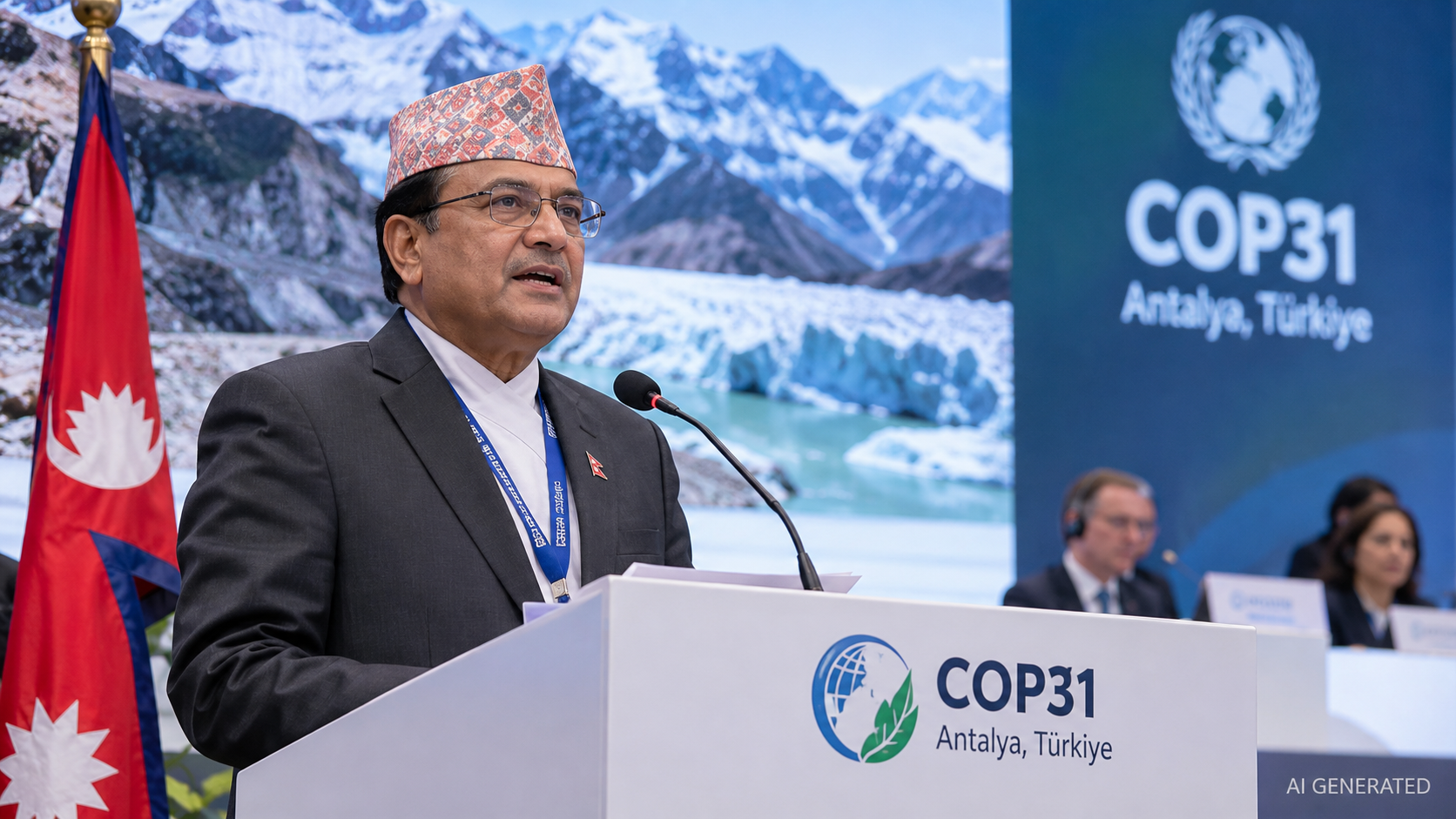
Nepal’s Minister for Foreign Affairs, Shisir Khanal, called for urgent international action to expand climate adaptation financing while representing the Least Developed Countries (LDCs) at the Baku High-Level Dialogue on Adaptation during the 31st Conference of the Parties (COP31) in Antalya, Türkiye, on November 10, 2026. According to a press release issued by Nepal’s Ministry of Foreign Affairs, Khanal highlighted the disproportionate impacts of climate change on vulnerable nations, drawing attention to the severe human and economic consequences of recent climate-induced disasters in Nepal. He emphasized that although LDCs are implementing decentralized, people-centred adaptation measures through their National Adaptation Plans (NAPs), these domestic efforts require adequate international financing and technical support suited to their national circumstances. Stressing the importance of fairness in global climate action, Khanal stated that adaptation is not merely a technical or environmental response but a matter of climate justice, as the countries contributing least to climate change often experience its most damaging consequences.
During the dialogue, Foreign Minister Khanal outlined three major adaptation priorities for Least Developed Countries, focusing on predictable climate finance, stronger implementation frameworks and greater community participation. He urged international partners to translate existing commitments to increase adaptation financing into clear, credible delivery mechanisms with simplified funding access, ensuring vulnerable countries can obtain financial resources without excessive procedural barriers. He also called for accelerating adaptation measures at national and international levels in accordance with the UAE Framework for Global Climate Resilience and the Belém Adaptation Indicators. Another major priority was strengthening locally led adaptation, particularly by empowering local institutions and frontline communities to identify climate risks, determine adaptation priorities and guide investment decisions. These proposals reflect the LDCs’ demand for financing arrangements that directly support communities most exposed to climate-related threats.
In a separate engagement, Khanal interacted with national and international media representatives, highlighting Nepal’s climate challenges and ongoing recovery requirements. During an interview with CNN, he discussed the devastating effects of recent climate disasters, the country’s recovery efforts, international humanitarian and financial assistance, and the provisional allocation of financing from the Fund for Responding to Loss and Damage. He also emphasized the importance of maintaining the global 1.5°C temperature goal, addressing the consequences of rising temperatures for fragile mountain ecosystems and implementing Nepal’s National Adaptation Plan. The ministry’s statement indicates that the discussion included the provisional loss-and-damage financing allocation but does not specify an amount or confirm that the funds had been disbursed. Khanal’s media engagements formed part of Nepal’s broader effort to draw international attention to the increasing vulnerability of Himalayan communities and the need for financial support to strengthen climate resilience.
Meanwhile, Minister for Agriculture, Forests and Environment Gita Chaudhary arrived in Antalya on November 10 to participate in relevant COP31 meetings, strengthening Nepal’s ministerial representation at the conference. The Nepali delegation continued its participation in thematic negotiations and discussions throughout the second day, focusing on adaptation, climate finance and mountain-related environmental challenges. According to the Ministry of Foreign Affairs, Khanal was scheduled to continue his official engagements on November 11, advocating for meaningful COP31 outcomes through multilateral cooperation and global solidarity. Nepal’s participation emphasized the need to connect international commitments with practical financial and institutional support for vulnerable countries. The November 10 press release documents Nepal’s adaptation financing demands and diplomatic engagements but does not announce a new funding agreement, confirmed financial disbursement or formally adopted COP31 decision.