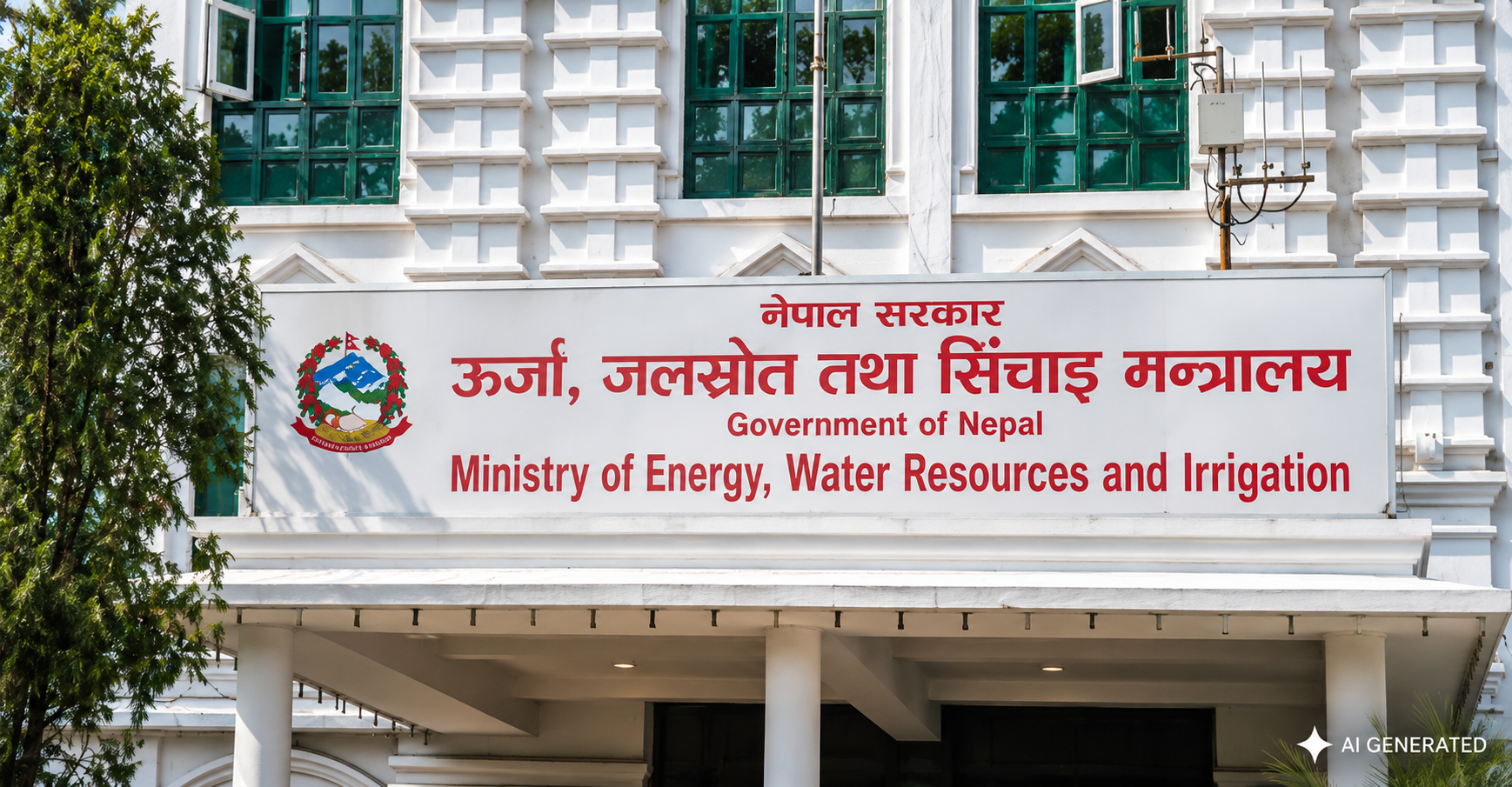
The Government of Nepal’s Ministry of Energy, Water Resources and Irrigation has announced major achievements in electricity exports, flood recovery and energy sector management during the 15-day period from Ashoj 1 to Ashoj 15, 2083 BS. According to a press release issued on Ashoj 16, 2083 BS, Nepal exported approximately 565.6 million units of electricity during Bhadra, generating revenue exceeding Rs 5.09 billion. The ministry reported that electricity export earnings increased by approximately Rs 382.7 million compared with the corresponding period of the previous year, despite challenges affecting electricity generation and infrastructure. The ministry also confirmed that electricity services had been restored across the affected areas of Rasuwa and Nuwakot following the devastating Bhotekoshi floods. A seven-member scientific committee was formed to investigate the causes, geographical characteristics and environmental factors associated with the flooding and recommend measures for strengthening long-term hydropower infrastructure resilience.
The ministry highlighted continued progress in electricity restoration, disaster preparedness and flood forecasting improvements. Following flood damage to the 220 kV Trishuli transmission infrastructure, approximately 190 MW of hydropower generation was disrupted, while flooding in the Seti and Madi river corridors affected an additional 262 MW of generation capacity. Subsequent repairs enabled several projects to resume operations, including 190 MW of generation in the Seti–Madi corridor, while restoration work continued at other damaged facilities. To strengthen disaster preparedness, the Department of Hydrology and Meteorology extended major river flood forecasting from three to five days and flash flood forecasting from 24 to 48 hours. During the heavy rainfall period from Ashoj 9 to 11, the ministry also directed electricity utilities, local authorities and security agencies to maintain high alert and implement necessary preventive measures.
On the regulatory and infrastructure front, the Electricity Regulatory Commission introduced new electricity transmission access charges for private-sector participation in the national grid, including provisions for long-term and short-term transmission access. The ministry also coordinated efforts to remove obstructions along 12 under-construction transmission line projects, addressing issues related to land acquisition, forest clearance, tower installation and other implementation challenges. Meanwhile, the Alternative Energy Promotion Centre (AEPC) launched advanced energy efficiency training for 45 engineers from industries, academic institutions, research organizations and government agencies, with the objective of promoting safe, reliable and sustainable energy use. The ministry further reported cooperation discussions with the World Bank, Asian Development Bank and other development partners concerning electricity infrastructure, flood damage assessment, disaster-resilient reconstruction and scientific studies.
The ministry also announced progress toward developing a National River Corridor Development Plan through coordination led by the Water and Energy Commission Secretariat. The initiative seeks to ensure safer hydropower infrastructure, reduce flood risks, strengthen environmental conservation and improve coordination among government agencies and private developers. Additionally, the ministry reported preparations to establish a more stable electricity supply arrangement in Hetauda, where approximately 10 percent of the power system had been affected, while emphasizing the importance of strengthening transmission infrastructure and technical readiness. The press release, signed by Joint Secretary and Spokesperson Mohan Kumar Shakya, outlines completed activities, regulatory decisions and ongoing initiatives but does not confirm the completion of all reconstruction projects or the final implementation of every proposed reform.