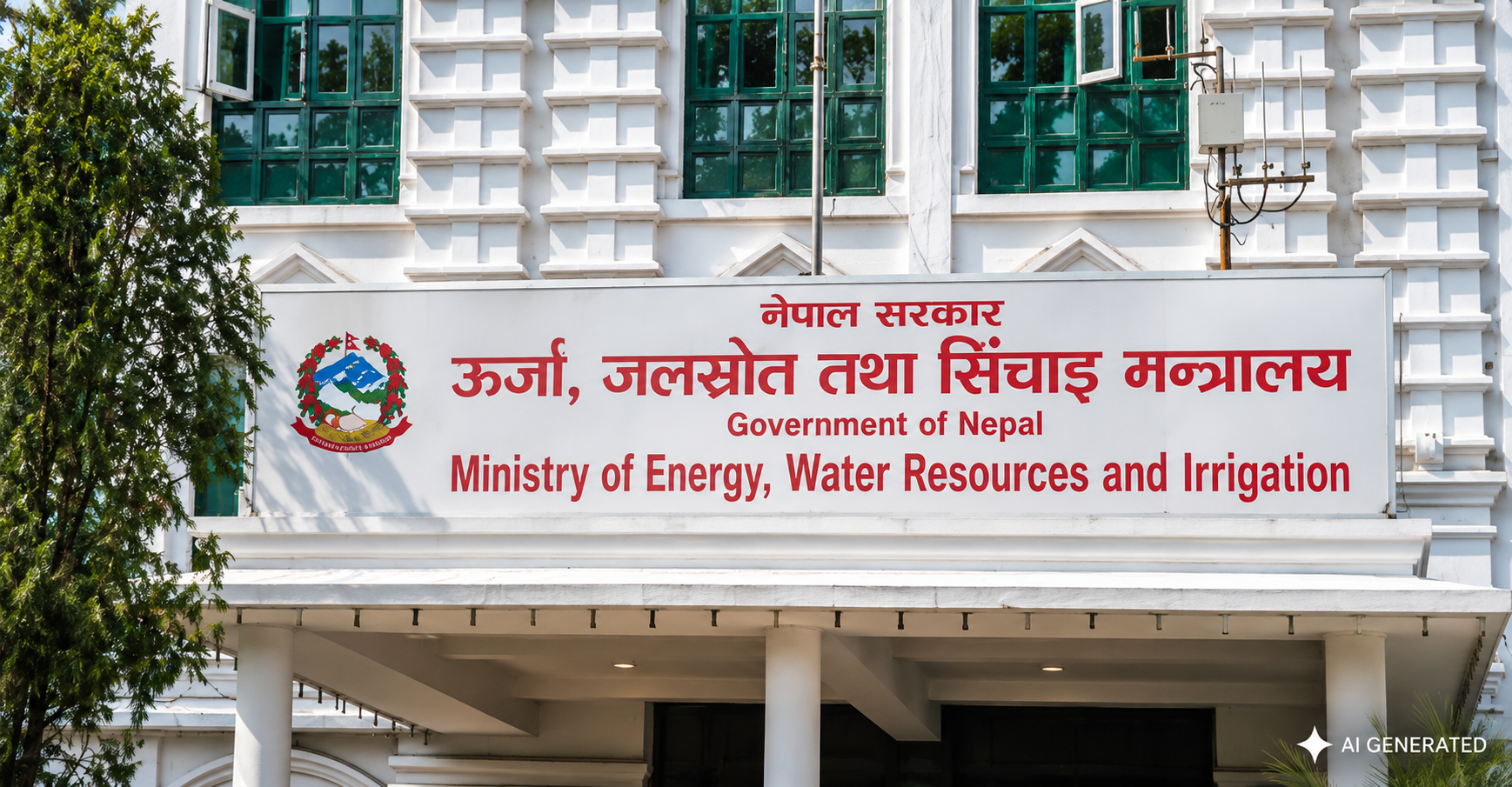
The Government of Nepal’s Ministry of Energy, Water Resources and Irrigation has published its 60-page Annual Development Programme for fiscal year 2083/84, outlining a proposed total budget of Rs 114.03 billion for energy, water resources and irrigation development. According to the document, published in Jestha 2083 BS, approximately Rs 70.12 billion has been allocated to the energy sector, while Rs 43.90 billion has been earmarked for water resources and irrigation. The programme prioritizes major hydropower projects, nationwide electricity transmission and distribution expansion, renewable energy development, irrigation modernization and disaster risk reduction. The ministry aims to add 1,040 MW of electricity generation capacity, bringing total installed capacity to 5,535 MW, while expanding transmission lines above 66 kV from 7,048 to 7,808 circuit kilometres. Additional targets include increasing electricity access from 97.6 percent to 98.1 percent, raising annual per capita electricity consumption from 479 to 511 kWh, and expanding solar electricity generation from 66 MW to 95 MW. The ministry’s introductory statement clarifies that the proposed budget and programmes would proceed to implementation following parliamentary approval.
The energy development programme provides substantial funding for hydropower construction, electricity transmission infrastructure and distribution system modernization. Major allocations include Rs 21.62 billion for 132 kV and other transmission line expansion projects, Rs 11.30 billion for electricity distribution system upgrading and expansion, Rs 7.29 billion for 33 kV lines and substations, Rs 6.15 billion for the 140 MW Tanahu Hydropower Project, Rs 4.25 billion for the Dudhkoshi Reservoir Hydropower Project, and Rs 2.93 billion for the Budhiganga Hydropower Project. The plan also includes Rs 1.5 billion for Budhigandaki Hydropower Company and funding for Upper Arun and other generation projects. In addition, the ministry has outlined investments in smart metering, battery energy storage systems, SCADA expansion, cybersecurity, artificial intelligence-based electricity distribution optimization, blockchain-based monitoring, data centres and electric vehicle charging infrastructure. Renewable energy initiatives include rooftop solar installations, rural mini-grids, clean cooking technologies, biogas, waste-to-energy programmes and green hydrogen research, supporting the government’s broader transition toward clean and reliable electricity.
In the irrigation and water resources sector, the ministry aims to expand irrigation facilities to an additional 15,776 hectares of agricultural land, construct 70 kilometres of river embankments and reclaim approximately 210 hectares of land through river management activities. Major project allocations include Rs 3.16 billion for the Rani Jamara Kulariya Irrigation Project, Rs 2.99 billion for the Sunkoshi–Marin Diversion Multipurpose Project, Rs 2.85 billion for the Bheri–Babai Diversion Multipurpose Project, Rs 2.56 billion for the Babai Irrigation Project, Rs 2.55 billion for the Sikta Irrigation Project and Rs 1.97 billion for the Mahakali Irrigation Project. The programme also allocates approximately Rs 4.60 billion for river control activities, alongside investments in groundwater irrigation, flood risk management, rehabilitation of damaged infrastructure, landslide prevention and modernization of existing irrigation systems. These initiatives are intended to improve agricultural productivity, strengthen year-round irrigation access and protect communities and farmland from water-induced disasters.
The development plan further emphasizes strengthening electricity infrastructure, promoting climate-resilient development and modernizing government service delivery through advanced technologies. It includes projects for enhancing grid reliability, developing renewable energy systems in underserved areas, expanding cross-border electricity transmission, introducing digital monitoring tools and improving the management of major irrigation infrastructure. The ministry also proposes increasing electricity generation from micro and small hydropower projects from 41 MW to 43 MW during the fiscal year. The programme identifies federal and provincial responsibilities, individual project budgets and implementation priorities across Nepal’s seven provinces. The document presents planned budget allocations, development targets and proposed activities rather than completed achievements, with implementation dependent on budget approval, funding availability and the execution capacity of responsible agencies.