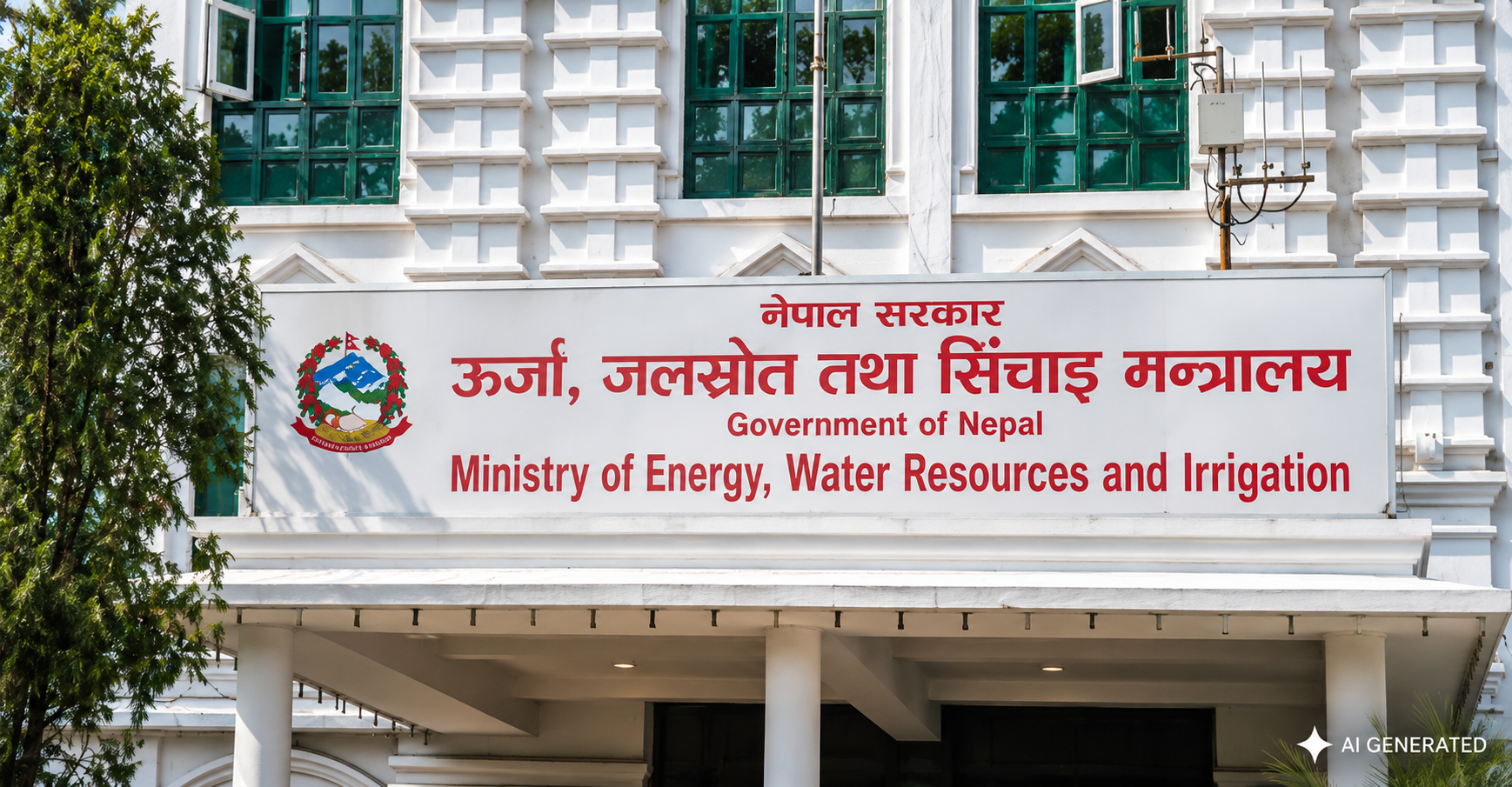
The Government of Nepal’s Ministry of Energy, Water Resources and Irrigation has announced major developments in flood management, renewable energy and climate financing during the 15-day period from Shrawan 16 to the end of Shrawan 2083 BS. According to a press release issued on Bhadra 1, 2083 BS, the ministry reported the successful completion of the 15th Nepal–India Joint Committee on Inundation and Flood Management (JCIFM) meeting, held from Shrawan 17 to 22, 2083 BS. During the meeting, a joint technical team inspected flood-prone rivers and vulnerable locations across Nepal’s Terai region. The two countries reviewed ongoing flood management activities along the Kamala, Bagmati and Lalbakaiya rivers, while also discussing embankment construction and cooperation concerning the Khando, Banganga and West Rapti rivers.
A major financial development highlighted in the report was the submission of two proposals to the Green Climate Fund (GCF) following approval from the Ministry of Finance. The ministry submitted a USD 48.08 million waste-to-energy project proposal aimed at producing energy from waste while reducing greenhouse gas emissions and mitigating climate change. It also submitted a USD 995,776 Readiness Support proposal focused on Nepal’s energy transition. Together, the proposals amount to approximately USD 49.08 million in proposed climate-related financing. However, the ministry confirmed only their submission to the GCF and did not announce final funding approval or disbursement.
The ministry also reported progress on the Renewable Energy and Energy Efficiency Bill, which had reached the final stage of obtaining concurrence from the Ministry of Law, Justice and Parliamentary Affairs. Meanwhile, the Alternative Energy Promotion Centre (AEPC) completed its annual implementation action plan and approved its procurement plan for fiscal year 2083/84. The ministry further announced that its Medium-Term Expenditure Framework (MTEF) had been approved in accordance with revised budget ceilings for fiscal years 2084/85 and 2085/86 and forwarded for entry into the National Planning Commission’s digital portal. These measures form part of ongoing efforts to strengthen renewable energy governance, financial planning and programme implementation.
In addition, the ministry organized a two-day workshop titled “Nature-based Solutions for Climate-Resilient Water Resources Management” in Kathmandu on Shrawan 28–29, 2083 BS. National and international experts, policymakers, researchers and stakeholders discussed protecting watersheds, forests, wetlands, rivers and groundwater resources to reduce flooding, landslides and other climate-related risks. The ministry also held its first Senior Management Team (SMT) meeting, directing that such meetings be organized at least twice a month to improve institutional performance and coordination. The press release, signed by Joint Secretary and Spokesperson Sandeep Kumar Dev, outlines completed administrative activities and ongoing initiatives but does not confirm final enactment of the proposed legislation or approval of the climate finance proposals.