The Government of Nepal has issued the Government of Nepal (Work Division) Rules, 2083, published in the Nepal Gazette on 2083/01/30. The rules were made by the Council of Ministers under Article 82(1) of the Constitution to define the structure and responsibilities of federal ministries. The new rules came into effect immediately and repealed the earlier Work Division Rules, 2074, while recognizing actions already taken under the previous rules.
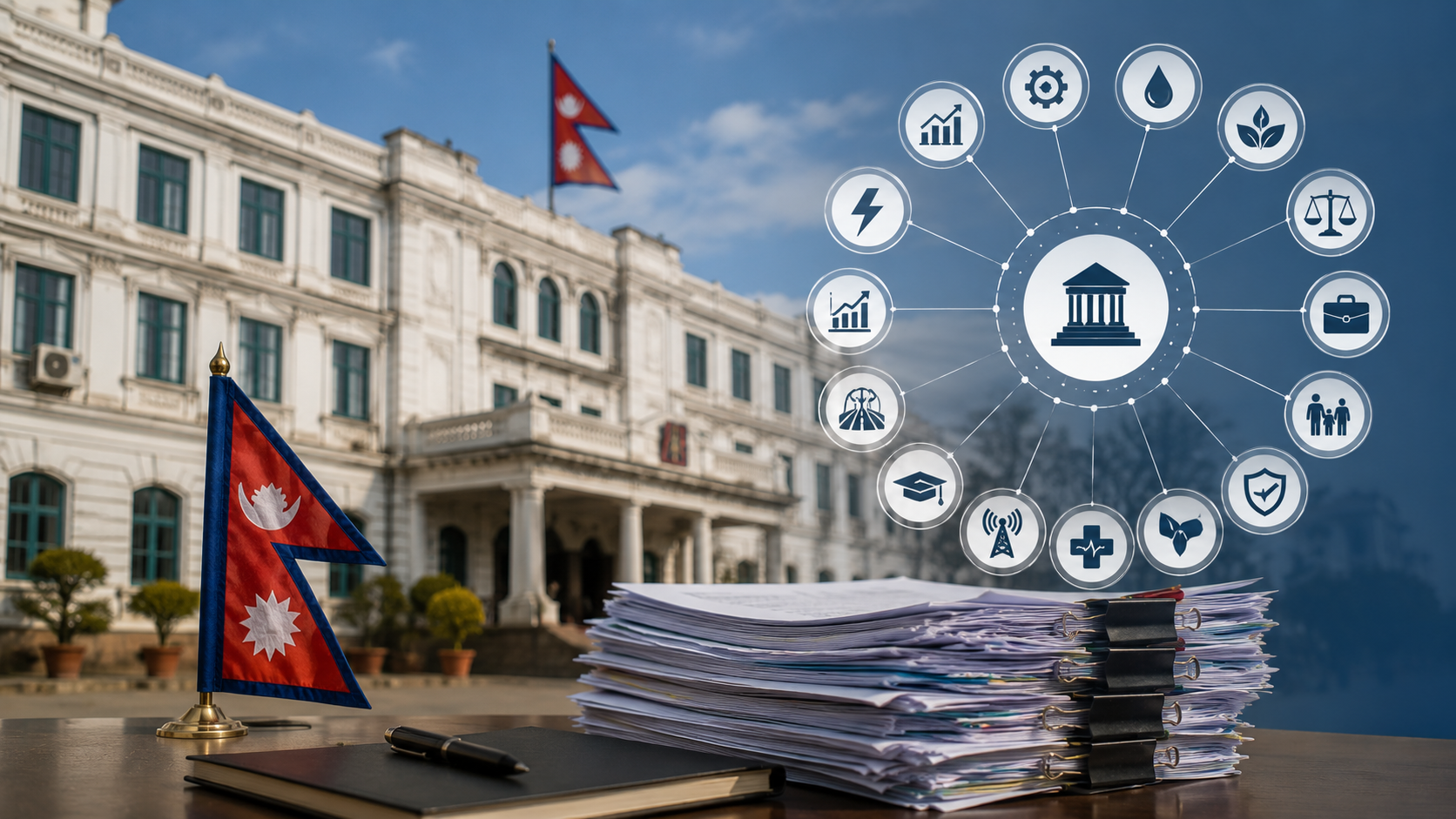
The new framework lists 18 ministries, including the Office of the Prime Minister and Council of Ministers, Finance, Industry-Commerce-Supply, Energy-Water Resources-Irrigation, Law-Justice-Parliamentary Affairs, Agriculture-Forest-Environment, Home, Foreign Affairs, Infrastructure Development, Land Management-Cooperatives-Federal Affairs-General Administration, Women-Children-Gender and Sexual Minorities-Social Security, Youth-Labour-Employment, Defence, Science-Technology-Innovation, Education-Sports, Information-Communication, Culture-Tourism-Civil Aviation, and Health-Food Hygiene.
The rules also redistribute major policy areas. The Prime Minister’s Office has been assigned central coordination, governance reform, anti-corruption, human rights, national planning, investment board, national data, cyber security, data governance, digital governance and artificial intelligence. The Infrastructure Development Ministry has been given responsibilities including roads, railways, transport, urban development, housing, drinking water, sanitation and major infrastructure. Agriculture, forestry, environment, climate change, biodiversity and weather-related work have been grouped under the Agriculture, Forest and Environment Ministry.
Other ministries have also received clearly defined mandates. The Home Ministry will handle internal security, citizenship, immigration, disaster management, elections, public holidays and drug control, while the Foreign Ministry will oversee foreign policy, diplomatic relations, consular services, passports, non-resident Nepalis and economic diplomacy. The new rules also define responsibilities for social security, gender and sexual minority rights, labour and foreign employment, science and innovation, education and sports, media and telecom, tourism and aviation, health, population, sanitation and food hygiene. The document states that ministers will be responsible for carrying out the duties assigned to their ministries, while the Council of Ministers can change ministry responsibilities through a Gazette notice.