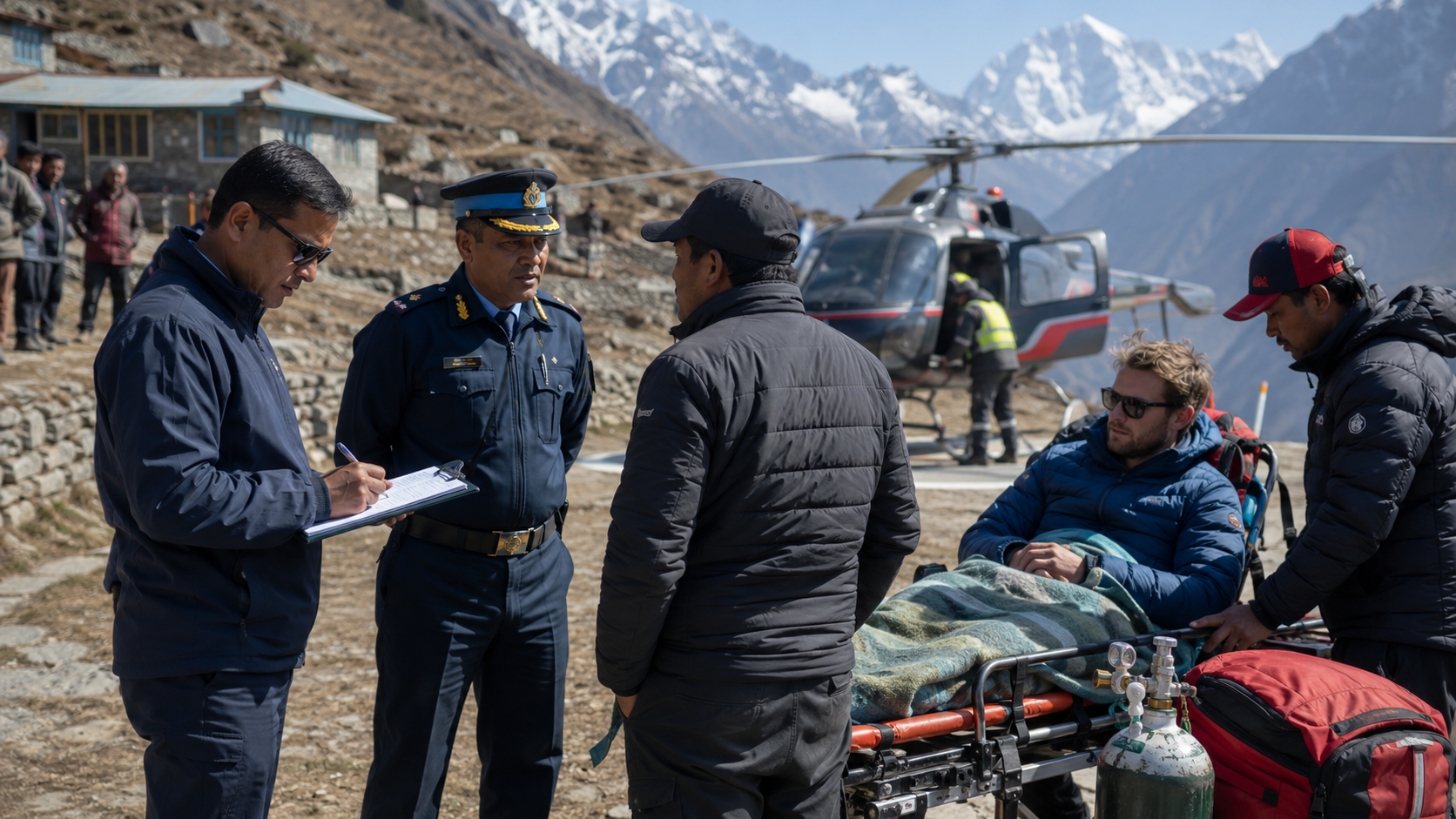
The Ministry of Culture, Tourism and Civil Aviation has said it has taken serious note of recent national and international reports alleging irregularities in Nepal’s trekking and mountain tourism rescue operations. The concerns include exaggerated altitude sickness symptoms, unnecessary helicopter evacuations, inflated insurance claims and possible coordination among a limited number of operators.
The government clarified that some media-reported allegations, including claims of deliberate harm to trekkers or feeding contaminated food, have not been substantiated by investigations conducted by the Central Investigation Bureau. It urged media outlets and stakeholders to verify such claims through official sources to avoid misinformation that could damage Nepal’s tourism image.
To address the issue, the ministry has announced immediate measures including strict investigation, blacklisting and public disclosure of individuals or agencies involved in fraudulent practices. A joint monitoring task force involving the ministry, Civil Aviation Authority of Nepal, Nepal Police, Nepal Tourism Board and aviation stakeholders has also been mobilized for stronger oversight, regular audits and timely communication.
The government also plans medium- and long-term reforms, including a technology-based rescue management system integrating trekker registration, rescue requests and insurance validation. Other measures include stricter licensing requirements, standardized medical protocols for altitude sickness, stronger local-level governance in trekking regions and ethical tourism certification standards.